
How to Prevent Moisture Caking in DTF Film and Powder?
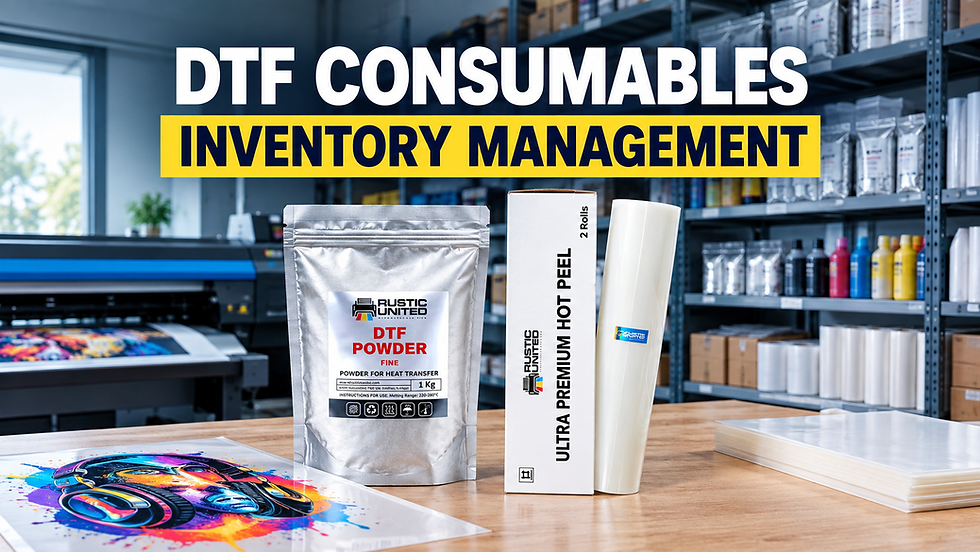
To stop moisture caking in DTF film and DTF powder, store both in airtight, sealed containers with active silica gel desiccants, in a climate-controlled space held at 40 to 60% relative humidity and 60 to 77°F (15 to 25°C). Skip any one of these three controls and hygroscopic powder and film coating begin absorbing moisture within hours.
This guide breaks down the exact numbers, container features, desiccant maintenance schedule, and FIFO rotation system needed to build a working DTF consumables inventory management process, whether you're storing one roll of film or pallets of bulk powder.
Why Do DTF Film and Powder Absorb Moisture So Easily?
DTF hot melt powder is a TPU (thermoplastic polyurethane) or PA (polyamide) based adhesive. Both are hygroscopic, meaning they pull water vapor directly from surrounding air. DTF PET film carries a similar risk because its coating layer reacts to humidity almost as fast as the powder does.
Once relative humidity climbs above 50%, water vapor bonds to powder granules and film coatings within hours. That moisture triggers:
Clumping: powder granules stick together instead of dusting evenly
Excess adhesion: powder sticks to unprinted areas of the film
Weakened bonding: transfers fail after pressing or washing
Curling or static buildup: film reacts to humidity swings
A single humid afternoon with a lid left open can contaminate an entire batch.
What Happens If You Store DTF Consumables Incorrectly?
Storage Condition | DTF Powder Shelf Life | DTF Film Shelf Life | Risk |
Sealed, desiccant-protected, climate-controlled | 12 to 18 months unopened / 6 to 9 months opened | Stable long-term with minimal coating degradation | Low |
Humidity above 60% for multiple days | Can degrade in weeks | Coating absorbs moisture, weakening ink adhesion and lamination | High |
Open container, no desiccant | Days to a few weeks depending on ambient RH | Rapid curling and static buildup | Very high |
For a shop running weekly production, that gap is the difference between reordering every quarter versus reordering every few weeks because half the stock caked before it was used.
What Are the Ideal Temperature and Humidity Settings for DTF Storage?
Climate control is the foundation everything else builds on; desiccants and sealed containers can't compensate for a room swinging 20 degrees between morning and afternoon.
Temperature: 60F to 77°F (15C to 25°C). Higher temperatures soften hot melt powder and cause transfers to stick together; lower temperatures make film brittle and prone to cracking.
Humidity: 40% to 60% relative humidity. Above 60% accelerates moisture absorption in both film and powder; below 40% invites static buildup, causing sheets to cling together or attract dust.
Use a digital hygrometer placed next to your storage containers for a real-time read on both numbers rather than judging by feel. Check it daily for the first month, then weekly once you understand how the space behaves through seasonal changes.
How Do You Use Desiccants Correctly in DTF Storage?
Silica gel packets are the standard second line of defense inside every sealed container; affordable, reusable, and easy to source in bulk.
Place fresh silica gel packs inside every container, not just the main bulk bin.
Check packets monthly. Most shift color, from blue or orange to pink or clear, once saturated.
Reactivate saturated silica gel in a low-temperature oven, or replace it outright.
Increase replacement frequency in summer or in shops without air conditioning.
Never rely on desiccants alone: they slow moisture absorption but don't stop it if the container itself isn't sealed.
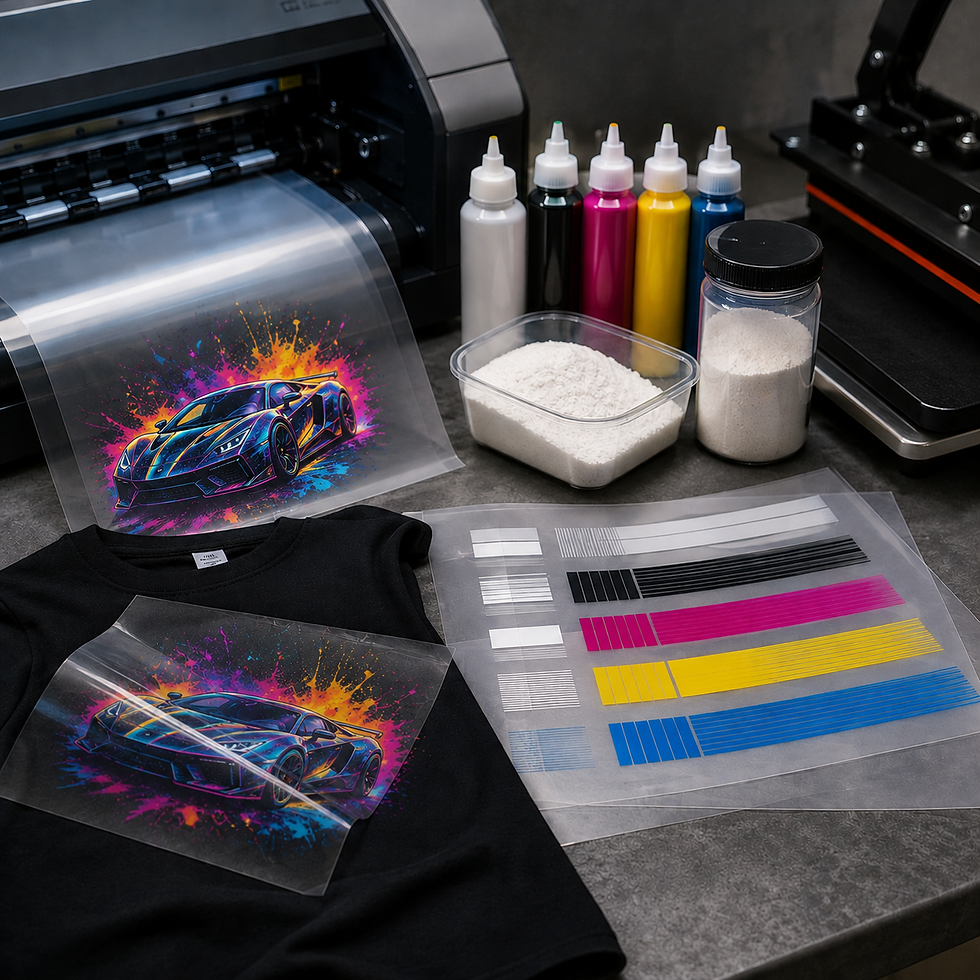
How Do You Choose the Right Sealed Storage Container?
Your container is the first physical barrier between consumables and ambient air. A loose-fitting lid defeats every other precaution on this list. Look for:
Airtight seals: gasket-lined lids or locking snap closures
Opaque or dark-colored material: blocks UV light, which degrades powder additives and fades printed film
Stackable design: for organized shelving and efficient use of space
Portion-sized containers: for daily use, kept separate from main bulk stock
That last point matters more than most shops realize: every time you open a large bulk container, you expose the entire supply to ambient air. Transferring a working amount into a secondary sealed container protects the rest of the inventory from repeated exposure.
Alpha Print Supply's Ultra Premium Double Matte Hot Peel film and Rustic United TPU hot melt powder both hold up well under proper storage, but no product survives an open bucket left out overnight.
How Do You Build a FIFO Inventory System for DTF Consumables?
Storage conditions solve half the problem; stock rotation solves the other half.
Label every container or roll with the date received.
Store newer stock behind older stock on shelving so staff naturally reach for the oldest batch first.
Keep a shared inventory log tracking receive and open dates.
Assign one team member to check humidity and desiccant condition weekly.
Buy only what you'll use within a realistic production window, not just for the lowest bulk price.
Keep backup rolls and a spare bag of powder on hand, without over-ordering beyond storage capacity.
Protect Your Investment Before It Reaches the Press
Moisture caking isn't a mystery. It's a predictable result of skipping climate control, desiccants, or sealed storage. Fix those three variables and your DTF consumables will perform consistently, batch after batch.
Ready to restock with consumables built for reliable performance? Alpha Print Supply carries premium DTF films, powders and inks your shop needs, backed by real technical support when you have storage or production questions.
Browse our complete collection of DTF printers as well to keep your business printing efficiently and delivering exceptional results.
Frequently Asked Questions
What humidity level causes DTF powder to cake?
Relative humidity above 50 to 60% is where moisture caking starts to accelerate. Below that range, powder stays dry and free-flowing. Keep storage between 40% and 60% RH and confirm the reading with a hygrometer rather than guessing.
How long do desiccant packets last in DTF storage containers?
Most silica gel packets last one to three months before needing replacement or reactivation, depending on shop humidity. Check the color indicator monthly. Once it shifts from blue or orange to pink or clear, the packet has stopped protecting your inventory.
Can DTF film recover after it absorbs moisture?
Mild exposure can sometimes be reversed by sealing the film with fresh desiccants for 24 to 48 hours before test-pressing a sample. Heavily affected film, showing curling or coating breakdown, usually can't be fully restored. Prevention stays far more reliable than recovery.
What's the ideal temperature for storing DTF powder and film?
Keep both between 60°F and 77°F (15C to 25°C). Higher temperatures risk softening hot melt powder and causing clumps or sticking; lower temperatures make PET film brittle, increasing the chance of cracking during handling or printer loading.
Do I need a dehumidifier for DTF consumables storage?
If shop humidity regularly climbs above 60%, yes. A dehumidifier stabilizes the storage room far more consistently than desiccants alone, which only protect what's inside sealed containers rather than the surrounding air.
How is DTF powder shelf life different when sealed versus opened? Sealed and unopened, properly stored DTF powder typically holds quality for 12 to 18 months. Once opened, that window shortens to roughly 6 to 9 months because the container is exposed to ambient air each time it's used.


Comments