
Hot Peel vs. Cold Peel DTF Film for Layering: Which One Actually Works?

Cold peel film is the safer choice for most layered DTF designs, because it gives you a longer working window before the adhesive locks in. Hot peel film can still work for layering, but only in narrow, controlled situations. The real answer depends on your press timing, your artwork, and how much room for error your workflow allows.
This guide breaks down how hot peel and cold peel DTF film behave during a second application, why timing changes the outcome, and how to test any film before you commit to a full production run. Whether you're stacking colors, adding a second design element, or building layered DTF designs for client work, the goal is the same: a bond that survives the wash, not just the press.
How Hot Peel and Cold Peel Films Behave During a Second Application
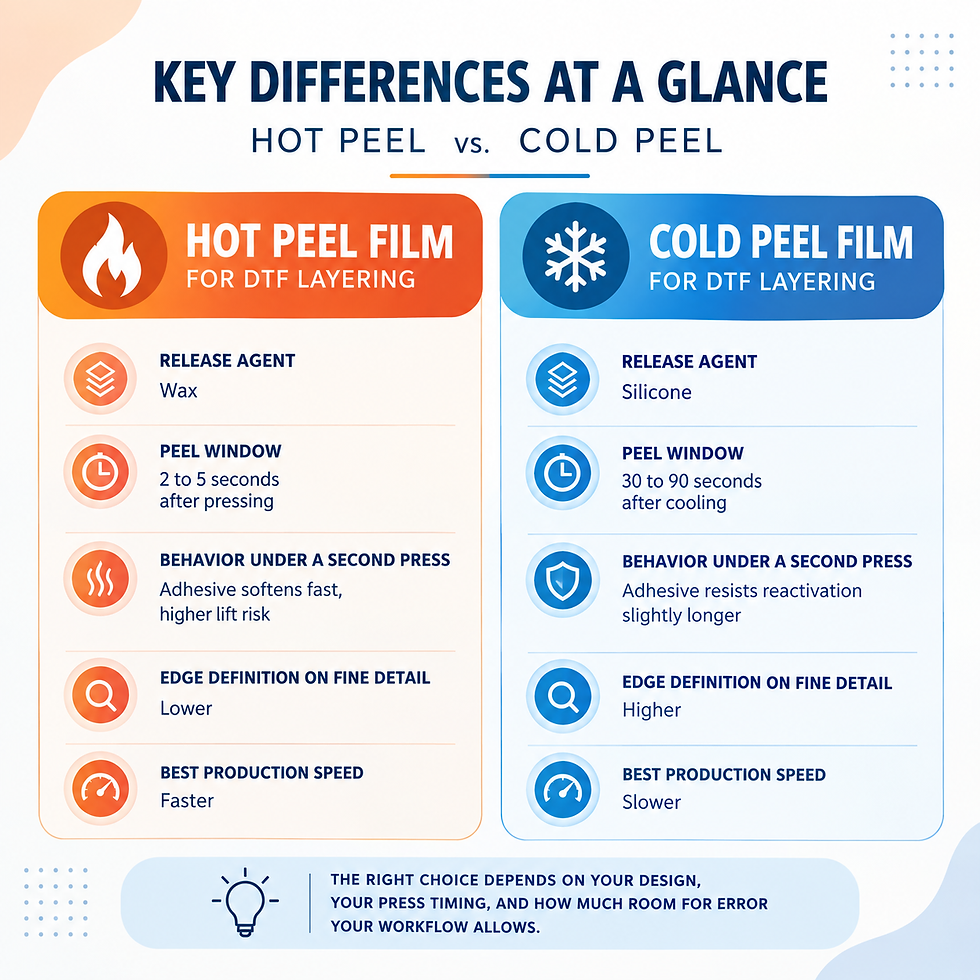
The core difference between the two film types comes down to the release agent and how it responds to heat.
Hot peel film uses a wax-based release layer. It lets go of the transfer within seconds of opening the press, while the adhesive is still soft.
Cold peel film uses a silicone-based release layer. The adhesive needs to cool fully, usually 30 to 90 seconds, before it separates cleanly.
That difference matters more once you're layering, because a second press reheats everything underneath it.
Factor | Hot Peel | Cold Peel |
Release agent | Wax | Silicone |
Peel window | 2 to 5 seconds after pressing | 30 to 90 seconds after cooling |
Behavior under a second press | Adhesive softens fast, higher lift risk | Adhesive resists reactivation slightly longer |
Edge definition on fine detail | Lower | Higher |
Best production speed | Faster | Slower |
DTF transfer layering puts more stress on the bond than a single application. Every extra heat cycle softens the layer beneath it, and hot peel film's faster-melting adhesive softens sooner in that cycle.
Why Peel Timing Matters More Than You Think
Peel timing isn't just about workflow speed. It determines whether the adhesive has fully set before it faces its next stress test.
Peel too early on hot peel film, and the transfer can lift ink or leave a hazy residue.
Peel too late on hot peel film, and the cooling adhesive grips the carrier, tearing fine detail.
Peel too early on cold peel film, and the bond hasn't stabilized enough to hold shape during handling.
For layered work, timing errors compound. A transfer that peeled cleanly on its own can still fail once a second layer presses on top of it, because the first bond never had the chance to fully cure before facing more heat.
A good rule of thumb: let your base layer cool completely and sit for a few minutes before introducing a second element. This isn't wasted time. It's the step that protects your wash results.
Adhesive Reactivation: The Hidden Risk in Layering
Adhesive reactivation happens when heat from a second press melts the adhesive of a layer that's already bonded. This is the single biggest cause of layering failure.
Here's what happens underneath the press:
The first layer's hot melt adhesive fuses with the fabric fibers.
A second pass reintroduces heat to that same area.
The adhesive softens again, and if pressure shifts even slightly, the bond weakens or the print distorts.
Full pressing every layer at full time and temperature is the most common mistake. Instead, use a lighter tack press (lower heat, shorter time) on early layers, and reserve full pressure and temperature for the final pass. This keeps early layers stable without overcooking the adhesive underneath.
If your shop runs high volumes of layered work, using a consistent, high-quality DTF layering film and a reliable adhesive powder reduces the guesswork. Alpha Print Supply stocks Rustic United hot peel film formulated for consistent release temperatures, which makes reactivation easier to predict and control across a production run.
When Each Film Makes Sense for Layered Work
Neither film is universally better. The right choice depends on your design and your production pace.
Choose hot peel film when:
You're pressing large, bold graphics with minimal fine detail
Speed matters more than maximum edge sharpness
You're doing a simple two-layer design pressed back to back
Choose cold peel film when:
Your design has small text, thin lines, or intricate detail
You need the strongest possible wash durability
You're new to layering and want a wider margin for error
Matching the film to the job, rather than defaulting to one type, is what actually prevents failures downstream.
Common Layering Failures (and How to Avoid Them)
Most layering problems trace back to one of five causes:
Pressing DTF on top of cured DTF. Standard adhesive bonds to fabric fibers, not to a cured, plastic-like surface. This is why designs meant to overlap need a specialty adhesive film rather than a standard transfer stacked on another.
Full-heat repeats. Repeating full press cycles on every layer causes bubbling, cracking, and edge lift.
Excess powder buildup. Every layer adds adhesive powder. Stack three or four layers and the patch turns stiff and prone to cracking.
Misalignment. Without alignment tools or heat tape, layers shift during the second press.
Skipping the cooldown. Peeling or pressing before the previous layer stabilizes locks in instability you can't fix later.
How to Test Film Compatibility Before Production
Never run a full batch on a new film or a new layered design without testing first.
Press a scrap sample using your standard settings and check peel behavior at both the hot and cold stage.
Layer a second element on the same scrap and watch for lifting, bubbling, or shifting during the second press.
Wash-test the sample at least 10 to 15 cycles before committing to production quantities.
Check edge definition under good lighting. Soft or blurred edges usually mean the peel timing was off.
Document your settings (temperature, time, pressure) once a combination works, so your team can repeat it.
Final Thoughts: Get Your Layering Right the First Time
Layering DTF transfers rewards patience over speed. Cold peel film gives you the wider safety margin most shops need, while hot peel film earns its place in fast, simple runs. The real skill is matching the film to the job, respecting peel timing, and never skipping the test press.
Ready to build a layering workflow that holds up wash after wash? Alpha Print Supply carries the hot peel films, DTF powders, and inks to help you get there. Reach out to our team for guidance on the right film for your next production run.
Frequently Asked Questions
Can you layer DTF transfers on top of each other?
Yes, but only in limited ways. Standard DTF adhesive bonds to fabric fibers, not to a cured DTF surface, so stacking a full design on top of another cured transfer often fails after washing. Adjacent, non-overlapping layers work reliably, and specialty adhesive films exist for true overlap designs.
Is hot peel or cold peel better for layered designs?
Cold peel is generally better for layering because its adhesive resists reactivation slightly longer and produces cleaner edges on detailed artwork. Hot peel still works for simple, bold two-layer designs where speed matters more than fine detail.
What temperature should I use for a second layer press?
Use a lighter tack press, roughly 20 to 30 degrees cooler and a few seconds shorter than your full press setting, for early layers. Save your full time and temperature for the final press to avoid overcooking the adhesive beneath it.
Why did my layered DTF design lift after washing?
Lifting usually means adhesive reactivation happened during a second press, or the base layer never fully cooled before the next layer was added. It can also mean powder buildup made the patch too stiff to flex with the fabric.
How many times can I wash a layered DTF print? A properly pressed and tested layered design can hold up for 50 or more wash cycles, similar to a single-layer transfer. Durability depends heavily on correct peel timing, adhesive reactivation control, and avoiding excess powder buildup between layers.


Comments