
Matte vs Glossy DTF Film: Which One Should You Choose?

Choose matte DTF film when you want a soft, fabric-like feel for hoodies, streetwear, and cotton apparel, and choose glossy DTF film when your design needs bold, high-contrast color that pops on polyester or promotional wear. Matte finish diffuses light for a premium, low-sheen look. Glossy finish reflects light for sharper vibrancy and shine. Your fabric, your design, and how your customer wants the print to feel decide which one wins.
This guide breaks down the real differences between matte and glossy DTF film, covering ink absorption, peel type, wash durability, and fabric compatibility, so you can match film to job instead of guessing.
What Is DTF Film and Why Does Finish Matter?
Direct to film printing uses a coated PET film as the transfer medium. Your printer lays ink onto the coated side, adhesive powder bonds to that ink, then heat presses the design onto the garment. The coating finish, matte or glossy, changes how light reflects off the print, how it feels against the skin, and how the film behaves during production.
A wrong film choice will not ruin your transfer, but it can cost you color vibrancy or customer comfort.
Matte DTF Film: Key Characteristics
Matte DTF film uses a frosted coating that diffuses light instead of reflecting it. That creates a soft, low-sheen finish that blends into fabric rather than sitting on top of it.
Key traits of matte film:
Low-sheen finish that hides fingerprints, scuffs, and surface glare
Softer hand feel, closer to a screen-printed look
Works well for full-front prints, hoodies, and cotton garments
Reduces the plastic-like appearance common with cheap transfers
Available in single-matte and double-matte versions for different handling needs
Alpha Print Supply stocks a double matte, hot peel film built for this use case. The Ultra Premium Double Matte Hot Peel film comes in 12, 16.5, and 24 inch widths at 328 feet per roll, giving you a matte-coated surface on both sides for easier handling during high-volume runs.
Glossy DTF Film: Key Characteristics
Glossy DTF film has a reflective surface that boosts perceived color saturation and contrast. Colors read brighter and sharper under normal light.
Key traits of glossy film:
Reflective surface that increases color pop and contrast
Works well for bold logos, sports graphics, and promotional apparel
Typically pairs with hot peel for faster production
Performs well on polyester and performance fabrics
Can feel slightly stiffer on the garment than matte
Glossy film is the traditional industry standard, widely available from nearly every DTF supplier. If your shop runs mostly bold, high-contrast graphics for teams or events, glossy film is often the easier starting point.
Matte vs Glossy DTF Film: Head-to-Head Comparison
Finish: matte diffuses light, glossy reflects light
Feel on fabric: matte feels softer, glossy can feel slightly thicker
Best use case: matte for cotton and streetwear, glossy for polyester and bold graphics
Peel type: matte often uses cold peel, glossy typically uses hot peel
Production speed: glossy tends to run faster because of hot peel
Neither option is objectively better. The right pick depends on the garment, the design, and your customer's expectations.
Which Fabric Works Best With Each Finish?
Cotton and cotton-blend garments generally look best with matte film. The low-sheen finish blends into natural fibers instead of sitting on top of them, so the print feels closer to the fabric itself.
Polyester and performance fabrics often pair well with glossy film. The reflective coating boosts contrast against synthetic textures, which is why glossy finishes show up on sports jerseys and event apparel.
If you print across mixed fabric types, stocking both finishes lets you match film to fabric on a per-order basis instead of compromising on either.
How Finish Affects Peel Type and Production Speed
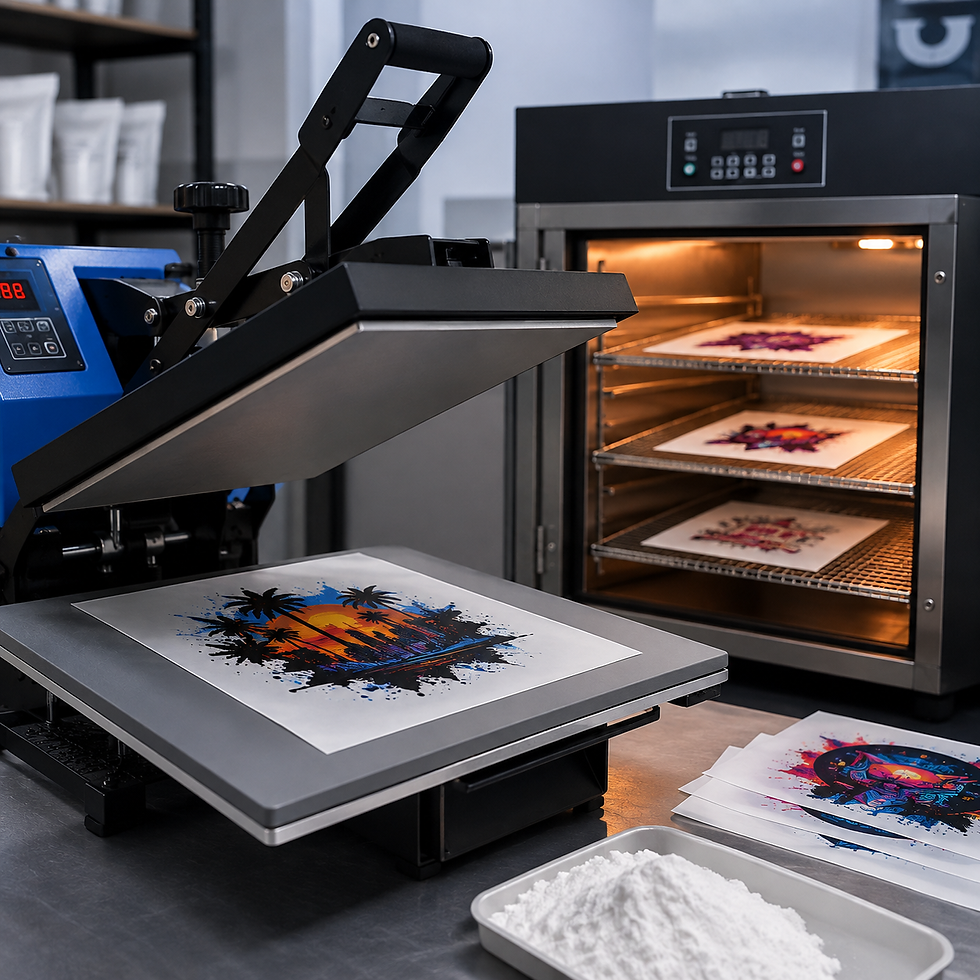
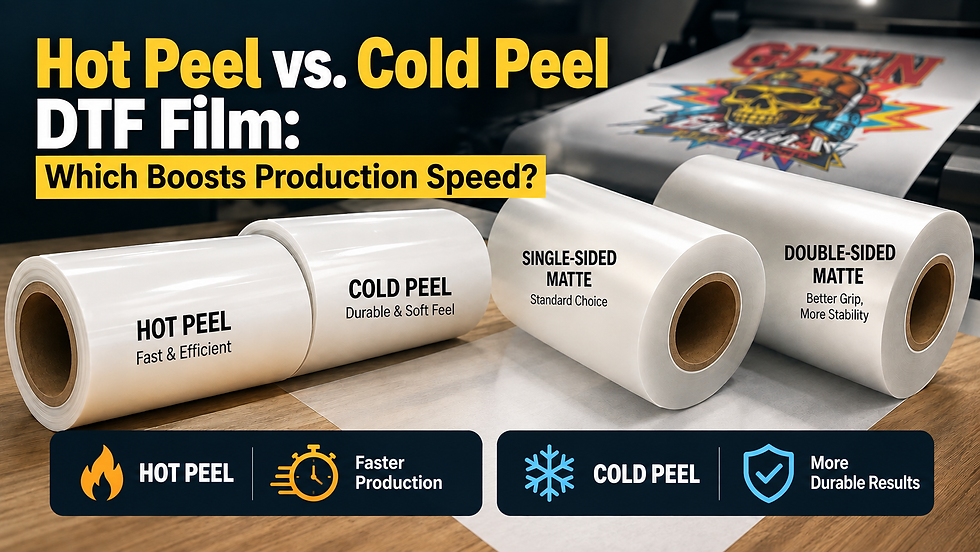
Hot peel film gets removed immediately after pressing while still warm, which speeds up your workflow. Cold peel film needs to cool fully before removal, which slows production but often improves adhesion on complex designs.
Glossy films most commonly use hot peel. Matte films come in both, though cold peel matte options suit detailed or full-coverage designs. If throughput matters more than fine detail, factor peel type into your decision too.
Does Finish Affect Wash Durability?
The finish itself is mostly cosmetic. Wash durability depends more on curing temperature, powder type, and press time than on surface finish. Properly cured DTF transfers commonly withstand 50 or more home washes when pressed at the correct temperature and time.
Powder quality plays a bigger role in longevity than finish does. Alpha Print Supply's Rustic United TPU hot melt powder bonds evenly across both matte and glossy films, which helps you get consistent wash durability regardless of which finish you print on.
How to Choose the Right DTF Film for Your Shop
Use these questions to guide your decision:
What fabric are you printing on most? Cotton favors matte, polyester favors glossy.
What look does your customer expect? Premium and subtle points to matte, bold and vibrant points to glossy.
How fast do you need to turn orders around? Glossy's hot peel workflow is typically faster.
Do you run mixed fabric jobs? Stocking both finishes removes the guesswork.
Testing small rolls of each finish before committing to bulk inventory is the fastest way to confirm what works for your garments and press settings. Alpha Print Supply's consumables lineup includes matte film along with the DTF inks that pair with it, so you can build a consistent workflow around whichever finish your shop needs.
Match the Finish to the Print, Not the Trend
Matte and glossy DTF film both produce strong, durable results when paired with the right powder, press settings, and fabric. The finish you choose should come down to what your garment and your customer need, not which option looks trendier online.
If you are ready to standardize your film, ink, and powder for consistent results, Alpha Print Supply carries the DTF equipment and consumables built to support both finishes at scale. Reach out today to find the right film, ink, and powder combination for your shop.
Frequently Asked Questions
Is matte or glossy DTF film better for beginners?
Glossy film is often easier for beginners because it typically uses hot peel, which simplifies the workflow. You remove the transfer right after pressing instead of waiting for it to cool. Matte film is not harder to use, but cold peel matte options require more patience.
Can I use matte and glossy film on the same garment?
Yes, some shops combine both finishes on one design using multiple presses and careful alignment. This creates varied textures within a single print. It takes more setup time, so most shops reserve this technique for premium or custom orders.
Does film finish affect how long a DTF transfer lasts?
Finish itself has minimal impact on wash durability. Curing temperature, press time, and powder quality matter far more than whether the film is matte or glossy. Both finishes can last 50 or more washes when pressed correctly.
Which film works better on dark garments?
Both matte and glossy film work on dark garments since DTF printing uses a white ink base layer under the design. The finish only changes how the top layer of color reflects light, not how well it covers dark fabric. Choose based on the visual style you want.
Is glossy DTF film more expensive than matte?
The cost difference between matte and glossy DTF film is generally minimal. Pricing depends more on film thickness, brand, and roll length than on finish type. Higher-quality films in either finish cost more but reduce the risk of transfer issues.


Comments