
How to Reduce DTF Cost Per Print Without Sacrificing Quality
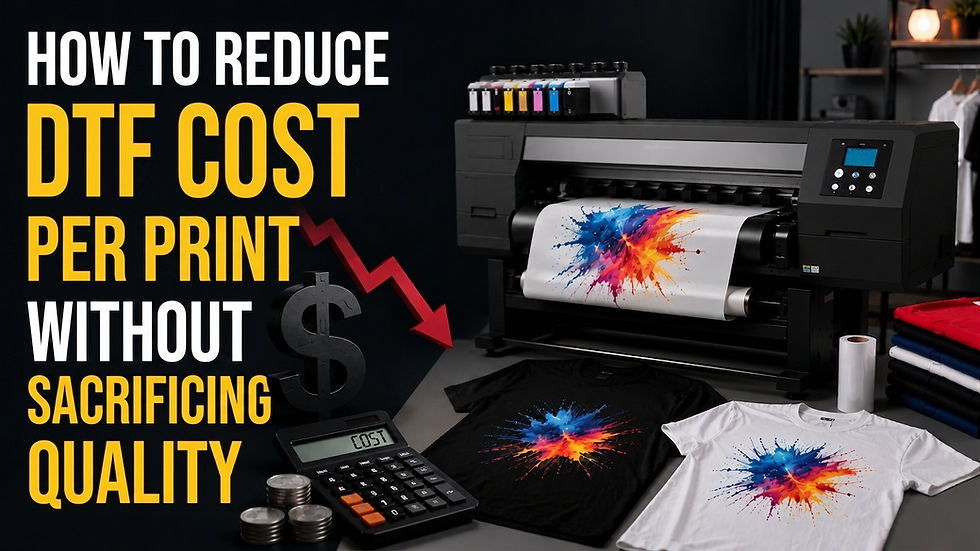
You can lower your DTF cost per print by tightening ink usage, cutting film waste with gang sheets, buying consumables at the right volume, and keeping your printer maintained. None of this requires cheaper materials. It requires knowing where your money goes and fixing the leaks.
This guide breaks down the real cost drivers in DTF printing and shows where small changes create the biggest savings, based on daily conversations Alpha Print Supply has with shops running high volume production.
Know Your Real Cost Per Print First
You cannot reduce a number you have not calculated. Most shop owners guess their cost per transfer. Your true cost has four parts:
Ink: $0.03 to $0.50 per print, depending on design size and white ink density
Film: $0.08 to $1.00 per print, based on roll price and nesting efficiency
Powder: $0.03 to $0.15 per print
Electricity and labor: $0.10 to $2.00 per print combined
A standard 12 inch by 12 inch transfer usually lands between $0.15 and $2.50 in total production cost. If your number sits above that range, you have room to cut costs without touching quality.
Optimize Ink Usage Without Cutting Corners
Ink is your biggest controllable expense, and your RIP settings decide how much you use on every job.
Lower white ink density to 80 to 90 percent instead of 100 on most designs. Full saturation rarely improves color enough to justify the extra ink.
Use a bump layer only on garments that need it, like dark or textured fabric.
Calibrate your ICC profile for your ink and film combination instead of relying on defaults.
Flush white channels daily; clogged nozzles waste ink through failed prints.
A tighter ink profile can cut ink spend by 15 to 25 percent per print with zero visible difference in quality.
Use Gang Sheets to Cut Film Waste
Film waste is where most shops bleed money. Printing one small design per sheet wastes far more film than nesting several together.
Gang sheet optimization is the single highest impact change you can make. Printing eight designs on one sheet instead of eight separate sheets can cut your film cost per transfer by 60 to 80 percent, the difference between a profitable order and a break even one.
Nest designs tightly with your RIP's auto-nesting tool, group similar sized designs into the same run, and track film utilization weekly instead of just film spend.
Rustic United 16.5" Ultra Premium Double Matte Hot Peel film, available at Alpha Print Supply, is built for high volume gang sheet work, holding consistent release and ink lay down across a full 328 foot roll.
Get More Mileage Out of Your Powder
Powder waste looks small on paper, but inconsistent application drives up material cost and reprint rates. Average consumption should land around 10 to 20 grams per 100 square inches. Running higher usually means over applying or losing powder to poor shake technique.
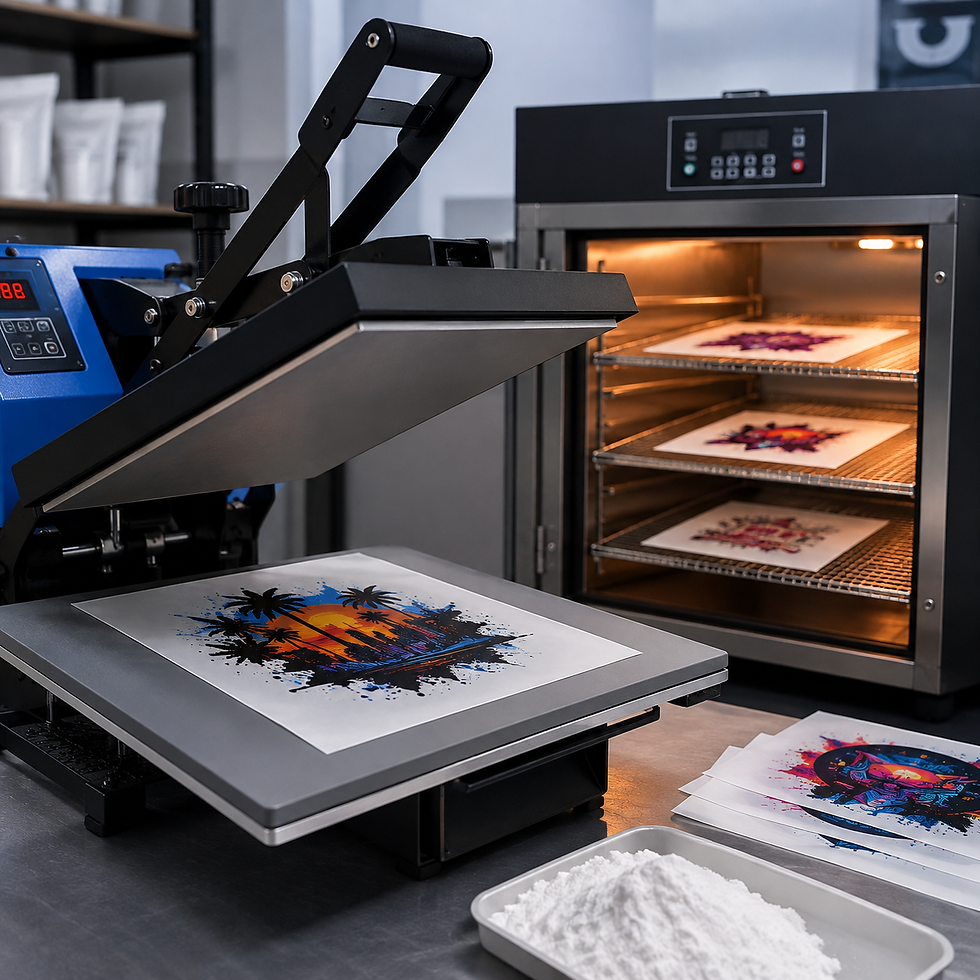
An automatic powder shaker delivers consistent, thin coverage instead of the variability you get by hand. Reclaiming excess powder and matching grade to fabric type further improves cost and cure.
The 24" STS Automatic S-20 Powder Shaker handles this automatically, which matters because manual application is a leading cause of DTF transfers cracking or peeling after a few washes. Fixing your powder process protects both cost and reputation.
Buy Consumables at the Right Volume, Not the Cheapest Price
Buying the lowest priced ink or film often backfires. Generic film with a 15 to 20 percent higher rework rate costs more than premium film once you count wasted prints and redone jobs.
Buy in volume from a supplier you trust. Bulk ink purchases reduce your per liter cost, and standardizing on one film width and ink line cuts calibration time. A starter budget of $300 to $800 is normal, but real savings come from consistent suppliers, not chasing small price differences.
Alpha Print Supply's Rustic United DTF Ink and Rustic United TPU Premium Powder are priced for this kind of consistent, high volume use, so your cost per print stays predictable instead of swinging with every reorder.
Maintain Your Equipment to Protect Your Margins
A printer running below spec quietly raises your cost per print through failed jobs, even when consumable costs look fine.
Replace printheads before total failure, since every bad print leading up to it wastes materials. Keep humidity stable in your print room, and clean capping stations weekly to prevent white ink settling, a common cause of clogged heads.
A printhead replacement runs $300 to $1,500 and typically lasts 12 to 18 months with proper maintenance. Skipping it can cut that to 3 to 4 months, multiplying your equipment cost per print. For a workhorse machine built for this volume, the Mimaki TxF150-75 DTF Printer is worth a look for shops scaling past the entry level stage.
When Outsourcing Beats Printing In House
Not every order justifies running your own equipment. During high volume weeks, sending overflow work to a dedicated DTF transfer printing service can lower your effective cost per print by avoiding rush labor and machine wear.
Closing Perspective: Your Cost Per Print Is a Process, Not a Price Tag
Cutting your DTF cost per print is not about buying cheaper materials. It is about controlling ink density, nesting film efficiently, applying powder consistently, and keeping equipment in spec. Fix those, and your cost per print drops while quality goes up.
Ready to tighten your production costs the right way? Alpha Print Supply stocks the printers, inks, films, and powders built for high volume, high consistency work. Browse our complete collection of DTF printers and premium consumables to keep your business printing efficiently and delivering exceptional results.
Frequently Asked Questions
What is a realistic cost per print for DTF transfers? Most shops land between $0.15 and $2.50 per transfer depending on size and film efficiency. A 12 inch by 12 inch design usually costs under $1.00 when your gang sheet layout and ink settings are dialed in. If your number is higher, audit film nesting first.
Does buying cheaper ink actually save money? Not usually. Cheaper ink often means less consistent color and more failed prints, which drives your real cost per successful transfer higher. Quality ink from a reliable supplier produces fewer reprints, which is where the actual savings come from.
How much can gang sheets really save on film cost? Nesting multiple designs onto one sheet instead of printing them separately can cut film cost per transfer by 60 to 80 percent, the single highest impact change most shops can make without new equipment.
Is an automatic powder shaker worth it for a small shop? If you run more than a handful of transfers a day, yes. Manual shaking causes inconsistent coverage, which increases powder waste and the risk of poor adhesion. An automatic shaker pays for itself through fewer reprints.
How often should I replace my DTF printhead? With proper maintenance, a printhead typically lasts 12 to 18 months. Neglecting white ink flushing and humidity control can shorten that to 3 to 4 months, multiplying your effective cost per print. Budget $300 to $1,500 for replacement.


Comments