
How to Get DTF Powder Residue Off a Shirt? Loose and Cured Powder Fixes
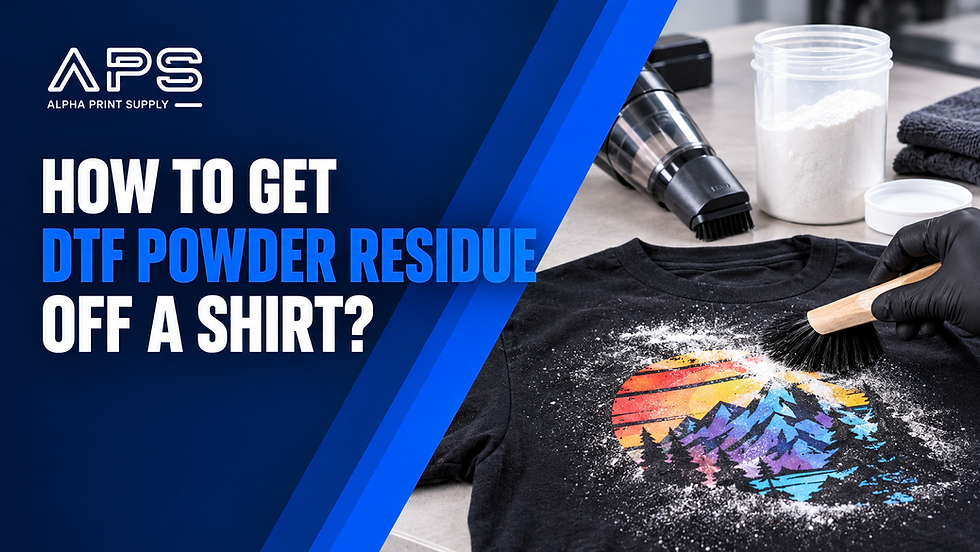
DTF powder residue comes off a shirt in one of two ways: brushing or vacuuming it away while it's still loose, or using heat, alcohol, or a solvent once it has melted and cured onto the fabric. The method depends on timing. Catch the powder before you press, and removal takes seconds. Miss that window and the powder cures into a hard, sticky bond that needs heat or chemicals to lift.
This guide covers both scenarios: removing loose powder before pressing and removing melted or cured powder after the heat press. You'll also get fabric-specific warnings, a comparison table, and prevention tips.
Why DTF Powder Residue Happens
DTF powder is a hot melt adhesive applied to a printed film while the ink is wet, then cured into a continuous adhesive layer that bonds the design to your garment during pressing.
The problem starts when powder lands outside the printed design, usually from static cling between film and powder. If that stray powder isn't removed before curing, it hardens onto the film anyway. During pressing, it transfers onto your shirt as specks, smudges, or a rough patch around the design.
Alpha Print Supply sees this most often with hand-applied powder, where excess is harder to spot than with an automatic powder shaker.
How to Remove Loose Powder Before Pressing
This is the easy scenario. If you catch excess DTF powder before the heat press activates it, you're just dealing with loose particles on the film or garment surface.
Step-by-Step Removal
Inspect both sides of the film. Stray powder is harder to see from the printed side, so flip it onto a dark surface and check underneath too.
Brush it off. A soft brush or lint-free cloth works. Use light strokes moving away from the design, not across it.
Vacuum lightly. A small desktop vacuum, even off, lifts loose powder through suction alone, with zero contact on the ink.
Tap and shake the film. Hold it at an angle and tap the back gently; powder that didn't bond to the wet ink falls away.
Re-check before pressing. Any powder left on the film transfers permanently once heat hits it.
Quick Facts on Loose Powder Removal
Detail | Guidance |
Best tool | Soft brush or desktop vacuum |
Timing | Before the heat press cycle only |
Risk level | Very low, no fabric contact yet |
Common mistake | Only checking the printed side of the film |
If you're running high volumes and hand-shaking keeps missing spots, an automatic powder applicator reduces the guesswork by applying and recovering excess powder consistently.
Removing Melted or Cured Powder
Once pressed, stray powder outside the design has already melted and bonded to the fabric fibers. You're no longer brushing away loose particles, you're breaking down a cured adhesive.
Method 1: Heat and Scrape
Reheating softens the adhesive enough to lift it.
Set a heat press to 300–320°F, or use an iron on a cotton setting with no steam.
Place parchment paper or a Teflon sheet over the affected area and press for 10 to 15 seconds.
While warm, scrape gently with a plastic card, working from the edges inward.
Wipe remaining tackiness with rubbing alcohol.
This works best on fresh cures, ideally within the same day. Older powder needs more heat exposure and patience.
Method 2: Rubbing Alcohol
For lighter residue or fabrics that can't take heat, isopropyl alcohol (90% or higher) is safer.
Dampen a clean cloth with alcohol and dab the residue in small circular motions.
Let it sit 5 to 10 minutes on stubborn spots, then scrub again and rinse with cold water.
Method 3: Acetone (Cotton Only)
Acetone breaks down cured adhesive faster than alcohol, but it's aggressive. Spot test on an inside seam first, apply with a cotton cloth, then rinse thoroughly with warm water. Never use acetone on polyester or blends; it can melt synthetic fibers on contact.
Method 4: Freezing (No Heat, No Chemicals)
Freezing makes cured powder brittle enough to crack off.
Seal the shirt in a plastic bag and freeze for 4 to 6 hours.
Remove and immediately flex the fabric at the spot so the hardened residue cracks.
Chip away pieces with a plastic scraper, then wipe with rubbing alcohol.
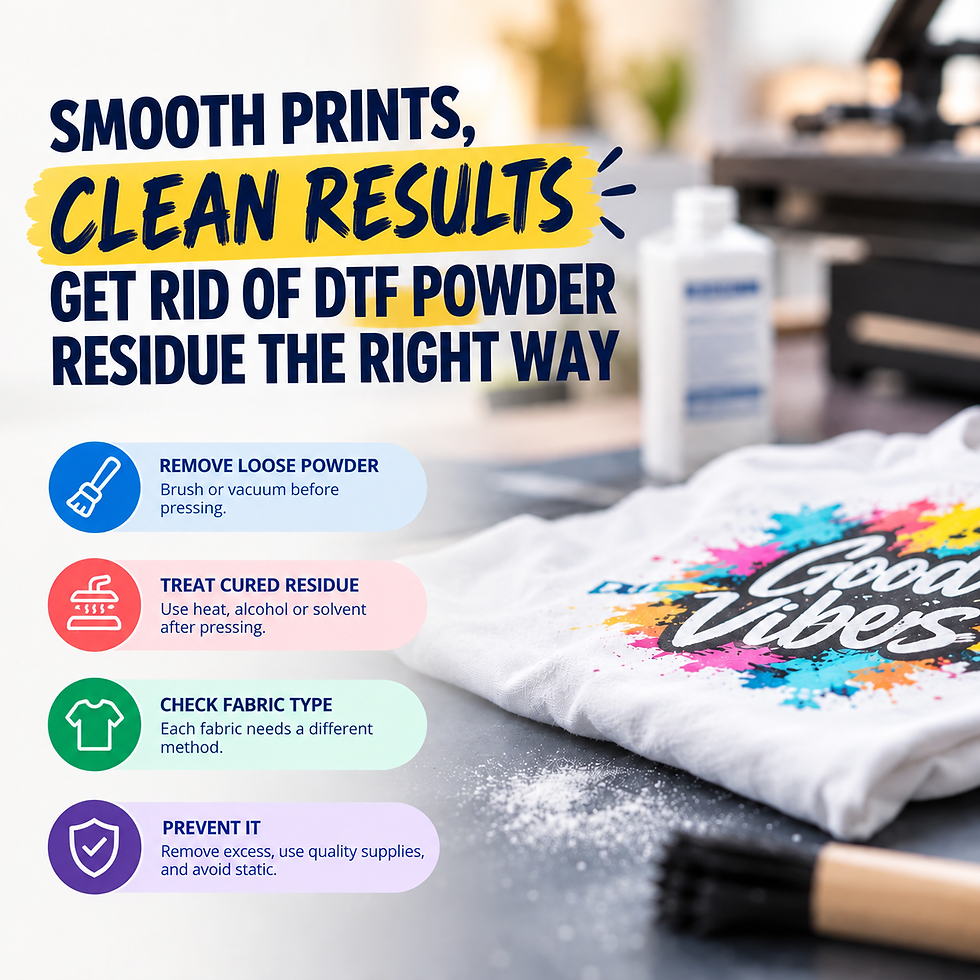
Which Method to Use by Fabric Type
Fabric Type | Recommended Method | Avoid |
100% cotton | Heat and scrape, or acetone | Excess heat above 320°F |
Polyester and performance wear | Rubbing alcohol at room temperature | Acetone, high heat above 150°F |
Blends (cotton-poly) | Rubbing alcohol first, light heat if needed | Acetone |
Dark or dyed fabrics | Alcohol, spot test first | Direct acetone contact |
Delicate or stretch fabrics | Freezing method | Scraping with metal tools |
Alpha Print Supply recommends spot testing any solvent on an inside seam before treating a visible area. A few seconds of caution saves you from turning a small powder spot into a bleached patch.
Preventing DTF Powder Residue From the Start
The cheapest fix is avoiding the problem entirely:
Shake and tap film thoroughly before it enters the curing oven, not after.
Check both sides of the film under strong lighting before every press cycle.
Use consistent, high-quality DTF powder rated for your ink and film.
Keep your work surface static-free, since static is the main reason powder clings outside the design.
Sourcing reliable film, ink, and powder reduces these headaches. Alpha Print Supply offers DTF supplies designed to work together as a system, often the simplest way to avoid residue problems before they reach a customer's shirt.
Final Thoughts: Don't Let Powder Residue Cost You a Shirt
DTF powder residue is fixable at almost any stage, but prevention beats cleanup every time. Catch loose powder with a brush or vacuum before pressing, and you'll never deal with cured residue at all. If a transfer already went through the press, match your fabric to the right removal method and test first.
If you're tired of troubleshooting powder issues shirt by shirt, look at your supply chain instead of your cleanup kit. Alpha Print Supply carries the films, inks, and powders print professionals rely on for cleaner, more consistent transfers.
Browse our complete collection of DTF printers and premium consumables to keep your business printing efficiently and delivering exceptional results.
Frequently Asked Questions
Can DTF powder residue be removed after washing the shirt?
Washing alone rarely removes cured powder completely, since the adhesive bonds to individual fibers. Use heat, rubbing alcohol, or a solvent to break down the bond first, then wash the shirt to clear remaining traces.
Does DTF powder residue get worse if I ignore it?
It won't spread, but it gets harder to remove as the adhesive cures deeper into the fabric over time. Fresh residue is always easier to lift than residue that's sat for weeks, so treat it early.
Is rubbing alcohol safe on all fabric types?
Rubbing alcohol is generally safe on cotton, polyester, and most blends. Always spot test on an inside seam first, especially with dyed or delicate fabrics, and let it sit briefly before scrubbing.
Why does my DTF powder keep landing outside the printed design?
This usually comes from static cling between the film and loose powder during application. It's more common with manual shaking than automatic applicators. Checking both sides of the film before curing catches most stray particles.
What temperature should I use to remove cured DTF powder with heat?
Most guides recommend 300 to 320°F for 10 to 15 seconds when reheating for scraping. Polyester and performance fabrics need lower heat, under 150°F, to avoid scorching or sheen damage.


Comments