
Brand-Name vs. Third-Party DTF Inks: The Real Cost of Cheap Supplies

Choosing between brand-name DTF inks and budget third-party DTF inks is one of the most critical decisions you will make for your print business. Saving 40% on a bottle of ink seems like an easy win for your profit margins. However, low-cost consumables often create hidden costs, including frequent nozzle clogs, ruined printheads, inconsistent color reproduction, and excessive material waste.
This comprehensive guide breaks down the true financial and technical impact of third-party DTF inks versus premium brand-name DTF inks. We compare printhead lifespan, ink viscosity, chemical stability, and ICC color profiles so you can protect your equipment and maximize profitability. At Alpha Print Supply, we help shops maintain peak performance by stocking certified, high-grade printing equipment and consumables.
1. Ink Viscosity and Chemical Stability
The physical performance of DTF textile ink relies heavily on ink viscosity and particle size. Industrial piezoelectric printheads, such as the Epson i3200 or XP600, require precise physical properties to fire ink micro-droplets accurately.
Viscosity Requirements
Standard CMYK DTF inks require a viscosity between 3.5 and 6.0 mPa*s at 22°C. White ink, which contains heavier titanium dioxide ($TiO_2$) particles for opacity, generally measures higher.
Too High (Thick): Ink causes micro-voids, deflected jets, and complete nozzle blockage.
Too Low (Thin): Ink bleeds on PET transfer film, pools before powder application, and produces blurry, muddy detail.
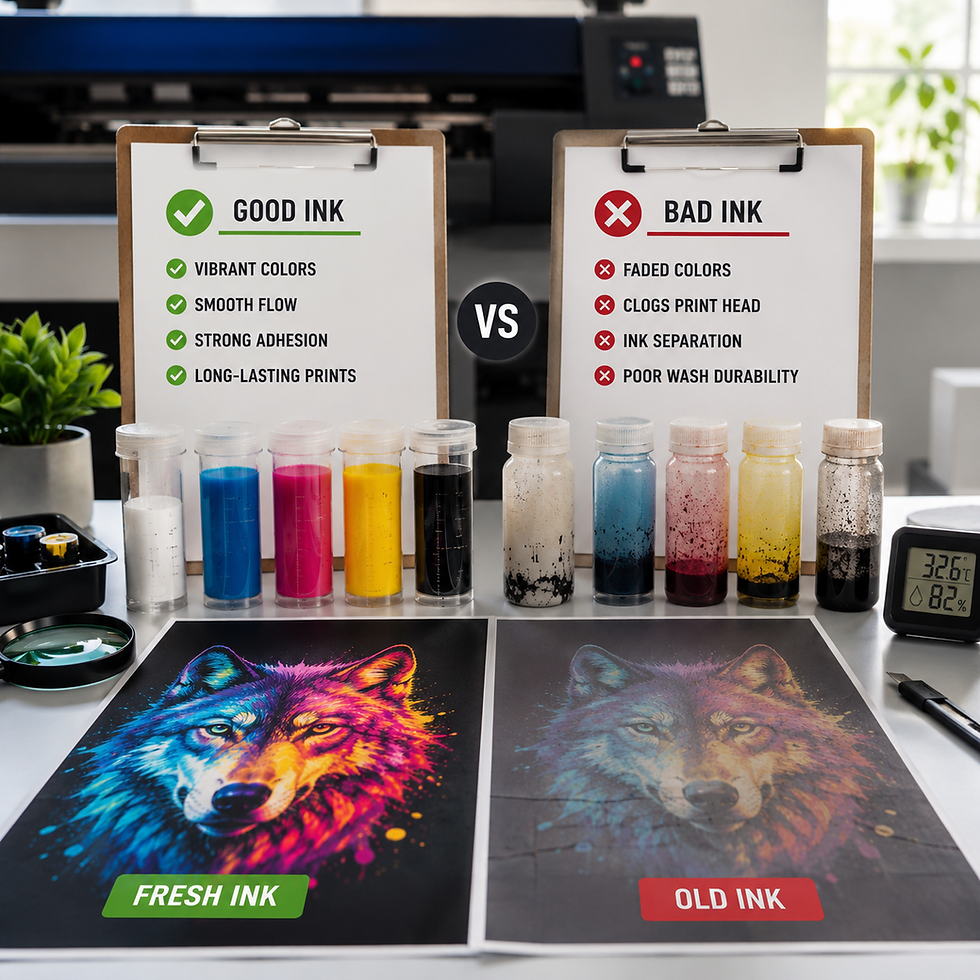
Brand-name DTF inks maintain strict shear stability, meaning viscosity remains constant even during high-speed production runs. In contrast, unbranded cheap DTF inks often lack stable dispersants. Temperature fluctuations can cause cheap inks to thicken by up to 15%, causing ink lines and dampers to restrict flow.
If you run high-volume setups, using tested inks from Alpha Print Supply ensures consistent viscosity, protecting your dampers and lines from premature clogging.
2. Printhead Lifespan and Maintenance Costs
Replacing an industrial printhead is a major unexpected expense. A single replacement Epson i3200 printhead costs between $900 and $1,500, not including lost production time or technician fees.
How Cheap Inks Damage Printheads
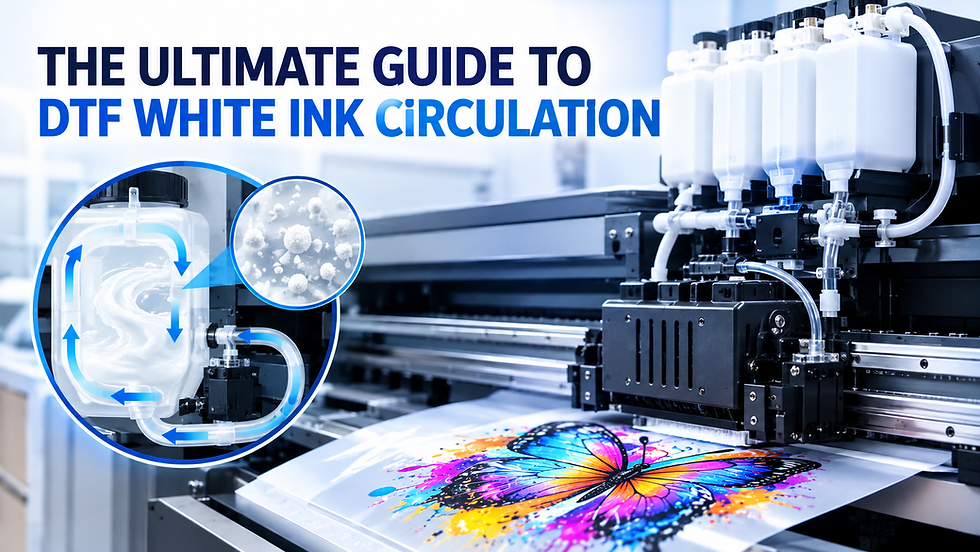
Aggressive Pigment Settling: Cheap white ink formulations use poorly coated $TiO_2$ particles that settle quickly. These particles clump together, scoring internal nozzle walls and causing permanent deflection.
Corrosive Solvents: Low-grade formulations often mix improper pH levels (outside the safe 7.0 to 9.0 range). Over time, these corrosive fluids break down the delicate nickel-plated channels and delicate piezo elements.
Excessive Auto-Clean Cycles: When cheap ink clogs printhead nozzles, operators run repeated auto-cleaning cycles. This wastes large amounts of film, powder, and ink while shortening capping station life.
Performance Factor | Brand-Name DTF Inks | Third-Party DTF Inks |
Average Printhead Lifespan | 1,800+ operational hours | 800 to 1,200 operational hours |
Clog Frequency (per 100 hrs) | 0.2 incidents | 1.7 to 3.0 incidents |
Pigment Particle Size | Below 200 nanometers | Inconsistent (>300 nanometers) |
Color Gamut (Adobe RGB) | 95% to 98% coverage | 82% to 89% coverage |
Wash Fastness Integrity | 50+ wash cycles (98% retention) | 20 to 25 wash cycles (significant fading) |
3. ICC Color Profiles and Color Accuracy
A key difference between original and knockoff inks is color management. ICC color profiles act as precise translators between your design software, your print engine, and your transfer film.
The Hidden Cost of Unprofiled Inks
Inaccurate Brand Colors: Without a dedicated profile, your printer cannot match corporate brand colors, leading to rejected jobs.
Excessive Ink Laydown: Poorly managed profile curves lay down too much liquid ink. This creates pooling on PET transfer film, slows drying times, and wastes up to 20% more ink per square foot.
Grainy Gradients and Muddy Shadows: High-grade inks achieve a wide color gamut (reaching up to 98% Adobe RGB coverage). Unbranded options cap out much lower, producing flat, dull prints with harsh tone shifts.
Brand-name DTF inks come with manufacturer-tested ICC color profiles calibrated specifically for standard RIP software systems. This out-of-the-box accuracy saves hours of manual spectrophotometer profiling.
To achieve consistent, vibrant transfers every time, pair premium inks with the reliable pet films and powders available at Alpha Print Supply.
4. Analyzing the Financial Impact
Let us look at the true cost of using cheap inks over a six-month period for a shop producing 200 transfers per day.
Scenario A: Third-Party DTF Ink ($35 per liter)
Ink Consumption Cost: $350 per month
Premature Printhead Replacement: $1,000 (after 6 months due to clogs)
Wasted Film & Powder (from cleaning cycles): $150 per month
Total 6-Month Cost: $4,000
Scenario B: Brand-Name DTF Ink ($65 per liter)
Ink Consumption Cost: $650 per month
Premature Printhead Replacement: $0 (printhead lasts 18+ months)
Wasted Film & Powder: $25 per month
Total 6-Month Cost: $4,050
While the upfront cost appears similar, Scenario A includes uncalculated downtime, missed deadlines, labor hours spent cleaning printheads, and dissatisfied customers. Investing in quality inks pays for itself through uninterrupted production runs.
5. Wash Durability and Customer Retention
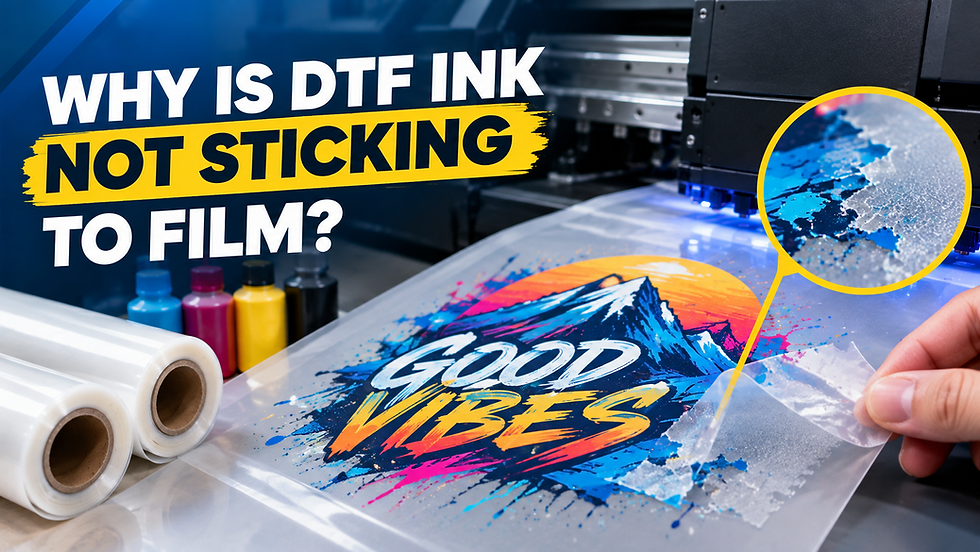
The quality of your ink directly affects the durability of the final garment. Premium DTF inks use high-grade polyurethane binders that flex with cotton, polyester, and blend fabrics without cracking.
Independent laboratory wash tests show that prints created with certified brand-name DTF inks retain over 95% of their color vibrancy after 50 commercial wash cycles. Prints made with lower-quality inks show noticeable cracking, peeling, and color fading after just 15 to 20 washes. Long-term customer retention depends on producing transfers that outlast the garment itself.
Conclusion: Protect Your Business with Certified Supplies
Saving money on upfront consumables often leads to higher overall operational costs. The risks of using unverified third-party DTF inks, including frequent clogging, unstable viscosity, lack of ICC color profiles, and premature printhead failure, outweigh the temporary savings per bottle. Choosing reliable consumables protects your machinery, keeps production running smoothly, and ensures high-quality results for your customers.
At Alpha Print Supply, we supply commercial print shops with top-tier equipment, tested consumables, and expert guidance. Contact our technical team today to discover how our certified DTF inks, film, and maintenance solutions can optimize your print workflow and protect your investment.
Frequently Asked Questions (FAQs)
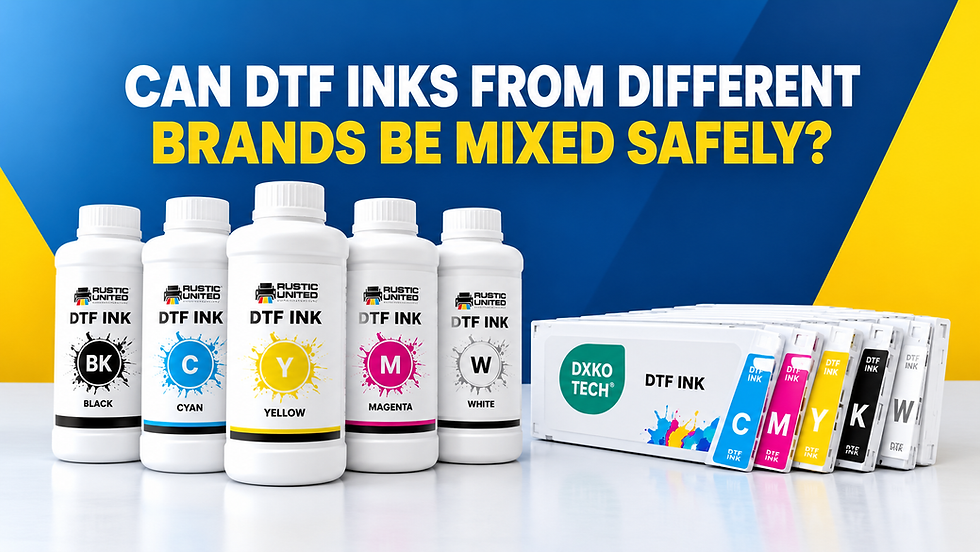
1. Can I mix different brands of DTF ink in my printer?
No, you should never mix different brands of DTF textile ink inside your printer lines or tanks. Different manufacturers use distinct chemical resins, pH levels, and dispersant packages. Mixing them can cause a chemical reaction that creates a gel-like sludge, immediately clogging your dampers and printhead channels.
2. Why does cheap white DTF ink cause more clogs than CMYK inks?
White DTF ink contains heavy titanium dioxide ($TiO_2$) particles to create a solid, opaque underbase on dark garments. Cheaper inks cut costs by using lower-grade dispersants, causing these heavy particles to separate and settle rapidly. This leads to solid sediment buildup inside printhead nozzles, ink lines, and dampers.
3. How does ink viscosity affect print quality on PET transfer film?
Ink viscosity dictates how droplets form as they leave the printhead nozzles. If the viscosity is too low, the ink spreads uncontrollably on the PET film, creating blurry edges and fine detail bleed. If the viscosity is too high, nozzles fire erratically, causing banding and missing print lines across your transfers.
4. What is the average lifespan of an industrial DTF printhead?
With proper maintenance and high-grade brand-name DTF inks, an industrial printhead (like the Epson i3200) typically lasts 1,800 to 2,500 production hours, or about 1 to 2 years. Using cheap, abrasive, or improperly filtered inks can destroy a printhead in as little as 3 to 6 months.
5. Do I need custom ICC color profiles for every DTF ink brand?
Yes, every ink formulation features a unique pigment density and color gamut. Using a generic profile with a new ink brand leads to inaccurate color output, incorrect white balance, and excessive ink laydown. Reputable ink manufacturers provide custom, pre-tested ICC color profiles designed for standard RIP software.
Comments