
Can DTF Inks From Different Brands Be Mixed Safely?
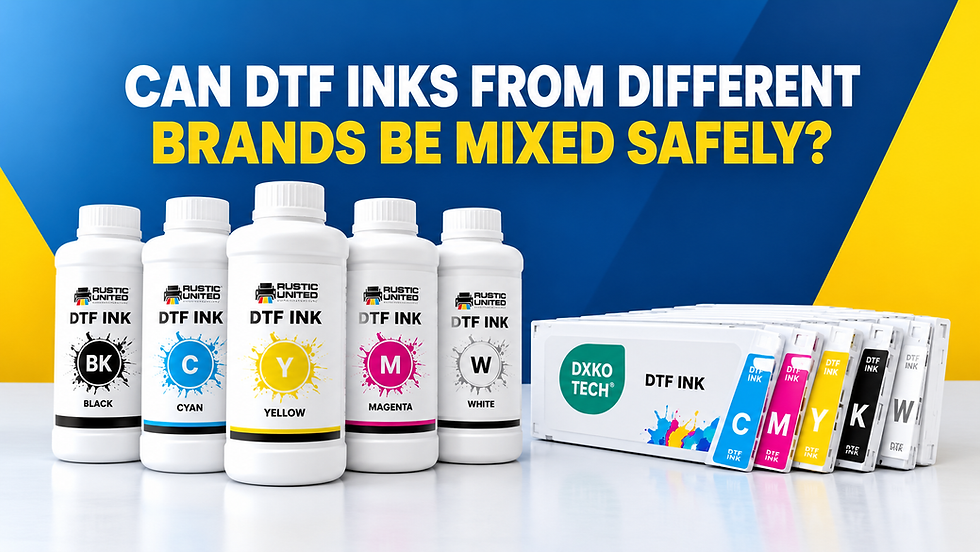
No, you should not mix DTF inks from different brands. Different manufacturers use different pigment loads, binder chemistry, and viscosity levels, and combining them risks clogged printheads, chemical separation, and inconsistent color output.
This guide breaks down exactly why mixing DTF ink brands is risky, what happens inside your printer when incompatible formulas meet, and how to switch ink brands safely if you need to change suppliers. You'll also find practical steps for choosing one reliable ink partner instead of gambling with your equipment.
Why You Shouldn't Mix DTF Ink Brands
Each DTF ink brand builds its formula around a specific pigment dispersion, binder system, and viscosity profile tuned for its printheads. When you combine inks from different manufacturers, those chemistries don't always agree.
Three factors make mixing DTF inks risky:
Pigment dispersion differences. Manufacturers use different particle sizes and surfactants to keep pigment suspended. Mixed formulas can cause pigment to clump or separate.
Binder incompatibility. The resin binders that make ink stick to PET film vary by brand. Incompatible binders can gel inside ink lines.
Viscosity mismatches. Ink that's too thick or thin for your printhead's calibration throws off droplet size and color accuracy.
Even different batches from the same brand can carry slight formula shifts. That's why manufacturers recommend flushing your system any time you switch supply sources, not just when switching brands entirely.
Shop owners who have run DTF equipment for years will tell you the same thing: ink is not the place to improvise. A printer technician can usually spot a mixed-ink clog within minutes, because the sediment pattern looks different from a normal dried-ink blockage. That's a repair call you can avoid entirely by sourcing your ink from one supplier.
What Happens When You Mix Ink Brands
1. Printhead Clogging and Damage
When incompatible inks combine inside your ink lines or printhead, the chemical reaction can produce sediment. That sediment settles in the microscopic nozzles that fire ink droplets, and a clogged nozzle chain shows up as banding, missing lines, or faded sections in your prints. In severe cases, the reaction damages the printhead itself, and DTF printheads typically cost hundreds to over a thousand dollars to replace depending on your printer model. That single repair bill often costs more than a full year of staying loyal to one ink brand.
2. Color Inconsistency and Poor Adhesion
Color accuracy depends on your RIP software's ICC profile matching your ink's exact pigment formula. Mix in a second brand, and your profile no longer matches what's actually flowing through the nozzles. You'll see shifted hues, reduced opacity in white ink layers, and prints that don't match your proofs. Poor pigment adhesion to the PET film can also weaken how well the transfer bonds during pressing, which leads to cracking or peeling after a handful of washes.
3. Voided Warranties and Support Gaps
Most printer and printhead manufacturers require documented use of approved or compatible inks to honor a warranty claim. If a technician traces a printhead failure back to mixed ink chemistries, that repair often falls outside coverage, and you absorb the full replacement cost.

How to Safely Switch DTF Ink Brands
If you need to move to a new supplier, don't just top off your existing tank. Follow a proper flush process:
Run your ink to empty in the affected channels before introducing new ink.
Flush the lines with distilled water first, using a syringe and hose attachment to clear residual pigment.
Follow with a diluted cleaning solution, typically mixed at one part solution to eight parts water, to dissolve remaining residue.
Run a nozzle check to confirm clean, consistent output before loading the new brand.
Load the new ink and run a test print on scrap film to verify color and coverage match your expectations.
For production printers, it's worth having an experienced technician handle the swap, especially on machines with automated ink circulation systems. A rushed changeover is the fastest way to trade a few dollars in savings for a printhead replacement bill.
Choose One Reliable Ink Brand Instead of Mixing
The simplest way to avoid this risk entirely is to standardize on one ink line and stick with it. Consistency pays off in four concrete ways:
Stable print quality. Every batch performs the same way, so your color profiles stay accurate.
Longer printhead life. No chemical guesswork means less sediment and fewer clogs.
Faster troubleshooting. When something goes wrong, you're diagnosing one variable, not two conflicting formulas.
Lower long-term cost. Fewer reprints, less downtime, and no surprise repair bills.
Alpha Print Supply carries Rustic United DTF Ink and STS Inks XPD2, both formulated for consistent pigment dispersion and reliable performance across production runs. Sticking with a single supplier for your ink, film, and powder also means your consumables are built to work together instead of being tested against each other.
Final Thoughts: Protect Your Printhead, Protect Your Profit
Mixing DTF ink brands might look like a quick way to save money or use up leftover stock, but the downside outweighs the savings almost every time. A clogged printhead, a failed warranty claim, or a batch of inconsistent transfers costs far more than the ink you were trying to stretch. Standardize on one trusted ink brand, flush your system properly if you ever do switch, and protect the equipment your business depends on.
Ready to simplify your ink supply? Alpha Print Supply stocks professional DTF printers from trusted brands, DTF inks, film, and powder built to work together, plus the support to help you choose the right setup for your production volume. Reach out today to talk through your ink options.
Frequently Asked Questions
Can I mix DTF white ink with color ink from a different brand?
No. White ink and color inks have different pigment loads and viscosity requirements, and mixing brands compounds that mismatch even further. This raises your risk of clogging and uneven opacity in your prints, especially on dark garments where white ink coverage matters most. Stick to matched formulas from one manufacturer for both white and color channels.
What happens if I accidentally mix two DTF ink brands?
Flush your system immediately with distilled water and a diluted cleaning solution before running any more prints. Run a nozzle check afterward to confirm the lines are clear and the color output looks normal. If you notice clogging, streaking, or unusual resistance, stop printing and have a technician inspect the printhead before you cause further damage.
How often should I flush my printer when switching ink brands?
Flush every time you switch brands, and flush again if you switch to a different batch from a supplier you haven't used in months. A quick flush takes far less time than repairing a damaged printhead. Most manufacturers include flushing instructions in their setup guides.
Does mixing DTF ink brands void my printer warranty?
It can. Most manufacturers require documented use of approved or compatible ink to honor a warranty claim. If a failure traces back to incompatible ink chemistry, the repair typically falls on you.
Is it safe to use leftover ink from a different brand as backup?
Only if you flush your system completely before switching to it. Never top off a tank of one brand with leftover ink from another, even if the colors look similar on the label. Store the leftover ink sealed, labeled, and dated for its own dedicated printer or channel if you plan to keep it.

Comments