
How Long Does DTF Ink Last? Storage, Shelf Life & Tips
Updated: 3 hours ago

If you're wondering how long DTF ink lasts, the short answer is: DTF ink lasts up to the shelf life its manufacturer states for unopened and opened bottles, provided it is stored as the label directs. Actual usable life varies with the ink, storage conditions, and handling practices. Proper storage doesn't just extend shelf life, it also helps prevent color shifts, white ink settling, nozzle clogging, and wasted production.
In this guide, Alpha Print Supply shares practical recommendations based on industry best practices and real-world DTF printing experience. You'll learn how long DTF ink lasts, what affects its lifespan, how to recognize expired ink, and the best ways to store it so your printer continues delivering vibrant, reliable transfers.
How Long Does DTF Ink Last?
Unopened DTF Ink Shelf Life
Each DTF ink manufacturer states a shelf life for sealed bottles, usually counted from the manufacturing date, so check the label or product page and store bottles as directed. Because the bottle has never been exposed to air or contaminants, the ink formulation stays more stable throughout its recommended shelf life.
Opened DTF Ink Usable Life
Once a bottle is opened, oxygen, humidity, and airborne particles begin affecting the ink over time. Although the ink may still appear usable, its performance gradually changes. For the best print consistency, use opened DTF ink within the opened-bottle shelf life its manufacturer states. Closing the bottle tightly after every use and minimizing unnecessary exposure to air can help preserve its quality.
Factors That Affect DTF Ink Lifespan
Several factors influence how long DTF ink stays usable:
Storage temperature
Humidity levels
Exposure to sunlight
Air contamination
Frequency of opening the bottle
Overall ink quality
Even premium ink can degrade faster if stored in a hot warehouse or exposed to direct sunlight. Likewise, poor-quality ink may lose stability much sooner despite ideal storage conditions.
How to Store DTF Ink for Maximum Shelf Life
1. Ideal Storage Temperature and Humidity
Temperature plays one of the biggest roles in preserving DTF ink. Store ink within the temperature range on the manufacturer's label, in a cool, dry environment. Excessive heat can accelerate chemical degradation, while freezing temperatures may permanently damage the ink formulation.
For the printing environment itself, keeping relative humidity within your printer's specified range (Mimaki, for example, lists 35% to 65% RH, non-condensing, for the TxF300-75) helps reduce static electricity and supports more consistent printer performance, particularly with white DTF ink.
2. Protecting Ink from Light, Air, and Contamination
Ultraviolet light and prolonged air exposure slowly break down ink components.
Store bottles away from windows and direct sunlight. Keep the original cap tightly sealed whenever the bottle is not being used. Never leave ink containers open longer than necessary during refilling.
It is also important to use clean funnels, syringes, or refill tools whenever transferring ink. Dust, dried ink particles, or foreign materials can contaminate the bottle and eventually contribute to clogged printheads.
Best Practices for Daily Handling and Storage
Proper daily habits can significantly extend the usable life of your DTF ink.
Gently shake the bottle before use according to the manufacturer's recommendations, especially white DTF ink, as its heavier pigments naturally settle over time.
Avoid vigorous shaking, which can introduce excessive air bubbles into the ink.
Store bottles upright with labels clearly visible for easy inventory management.
Avoid moving ink between storage areas with significant temperature changes, as consistent conditions help maintain stable viscosity and pigment dispersion.
Physical Signs of Expired or Degraded Ink
Expired DTF ink usually gives several warning signs before causing major printing issues.
Watch for:
Thickened or unusually thin consistency
Strong or unusual odor
Permanent pigment separation that doesn't remix
Clumps or sediment inside the bottle
Visible contamination
If these symptoms remain after gently mixing the ink, it is generally safer to replace the bottle rather than risk damaging your printer.
Tips to Make Your DTF Ink Last Longer
1. Rotate Inventory Using FIFO
Professional print shops commonly use the First In, First Out (FIFO) inventory method. Using older stock before newly purchased bottles reduces the chance of ink sitting on shelves beyond its recommended shelf life. Labeling bottles with purchase dates also makes inventory management much easier.
2. Match Ink Purchases to Your Production Volume
Buying excessive quantities of DTF ink may seem economical, but unused inventory can eventually expire. Purchase enough ink to match your expected production schedule rather than storing large quantities for extended periods.
3. Maintain Your Printer Alongside Proper Ink Storage
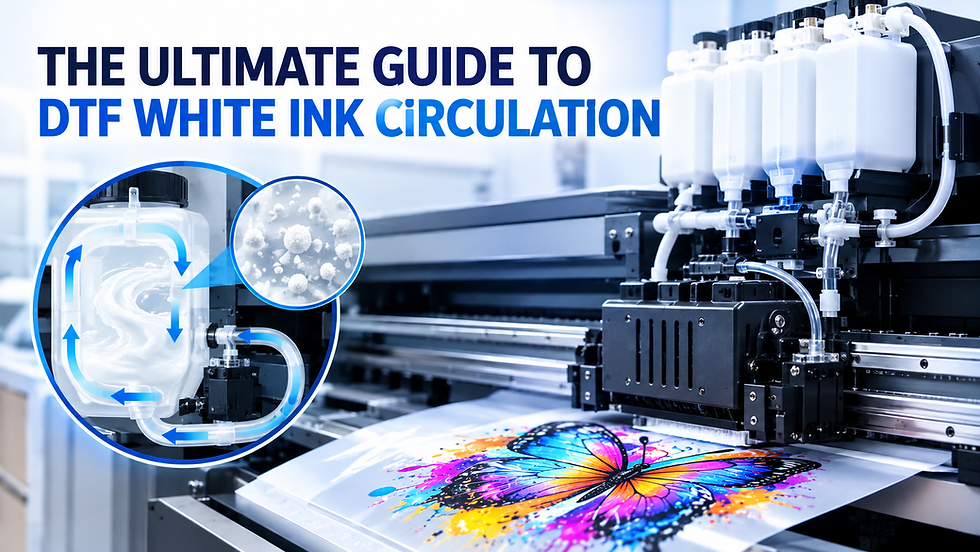
Good ink storage alone cannot compensate for poor printer maintenance. Regular nozzle checks, scheduled cleaning cycles, proper white ink circulation, and routine printer maintenance all contribute to longer ink usability and more reliable print quality.
Final Perspective: Keep Your Prints Consistent by Protecting Your Ink
The quality of your finished transfers begins long before printing, it starts with how you store your DTF ink. Following recommended storage temperatures, controlling humidity, minimizing contamination, and rotating inventory can help maximize shelf life while reducing waste and maintenance issues.
At Alpha Print Supply, we understand that dependable printing requires dependable supplies. That's why we provide professional-grade Rustic United DTF Ink along with expert guidance to help print businesses achieve consistent color, smoother production, and long-term printer performance.
Whether you're expanding your print shop or replacing consumables, choose high-quality DTF supplies from Alpha Print Supply to protect your equipment and deliver professional results every time.
Frequently Asked Questions
1. Does DTF ink expire?
Yes. DTF ink has a recommended shelf life because its pigments and chemical composition gradually change over time. How long it lasts depends on the ink, so use it within the manufacturer's stated shelf life for unopened and opened bottles. Always follow the manufacturer's recommendations for storage and usage.
2. What is the best temperature for storing DTF ink?
Store DTF ink within the storage temperature range on your ink manufacturer's label, in a cool, dry place. Avoid freezing temperatures, excessive heat, and direct sunlight, as these conditions can shorten the ink's lifespan and affect print quality.
3. Can I use DTF ink after its expiration date?
Using expired DTF ink is generally not recommended. Even if it appears normal, the ink may have changed in viscosity or pigment stability, leading to poor color accuracy, nozzle clogging, or inconsistent prints. Replacing old ink is usually more cost-effective than risking printer issues.
4. Why does white DTF ink separate so quickly?
White DTF ink contains heavier titanium dioxide pigments that naturally settle over time. Gentle shaking before use helps redistribute these pigments and restore a uniform mixture. Permanent separation or hard sediment, however, may indicate that the ink has deteriorated.
5. How can I make my DTF ink last longer?
Store DTF ink in a cool, dry environment, keep bottles tightly sealed, avoid direct sunlight, and maintain stable humidity levels. Use the FIFO inventory method, purchase ink according to your production needs, and perform regular printer maintenance. Together, these practices help preserve ink quality and support consistent printing results.

Comments