
How to Grow a DTF Printing Business (From 10 to 100 Shirts a Day)
Updated: 3 hours ago

Growing a DTF printing business from 10 to 100 shirts a day requires three things: faster equipment, a repeatable production process, and a reliable supply chain that does not break under higher volume. This is not about working longer hours. It is about removing the bottlenecks that cap your output today. This guide walks through the practical steps real shop owners use to scale DTF transfer printing, from equipment upgrades to workflow changes to smart outsourcing, so you can grow output without sacrificing print quality.
Where Most DTF Shops Get Stuck Between 10 and 30 Shirts a Day
Most shops hit a wall around 20 to 30 shirts a day. The printer runs fine. The problem is everything around it.
Common bottlenecks include:
Manual powder shaking that takes 3 to 5 minutes per sheet
A single heat press handling every order one at a time
DTF film ordered in small batches, causing mid-week stockouts
No standard settings, so every print run starts with guesswork
If you recognize these, you are not behind. You are exactly where most growing shops are. The fix is sequential, not simultaneous.
Step 1: Diagnose Your Real Bottleneck First
Before buying anything, track your actual production time for one full week. Log how long each stage takes: printing, powder application, curing, and pressing.
Shops usually find that powder curing and pressing, not printing, cause the biggest slowdown. A single printer can output far more than a manual press station can handle. Fixing the wrong stage wastes money and still leaves you capped at 30 shirts a day.
Step 2: Upgrade Equipment for Batch Production
Once you know your bottleneck, match your equipment to your target volume.
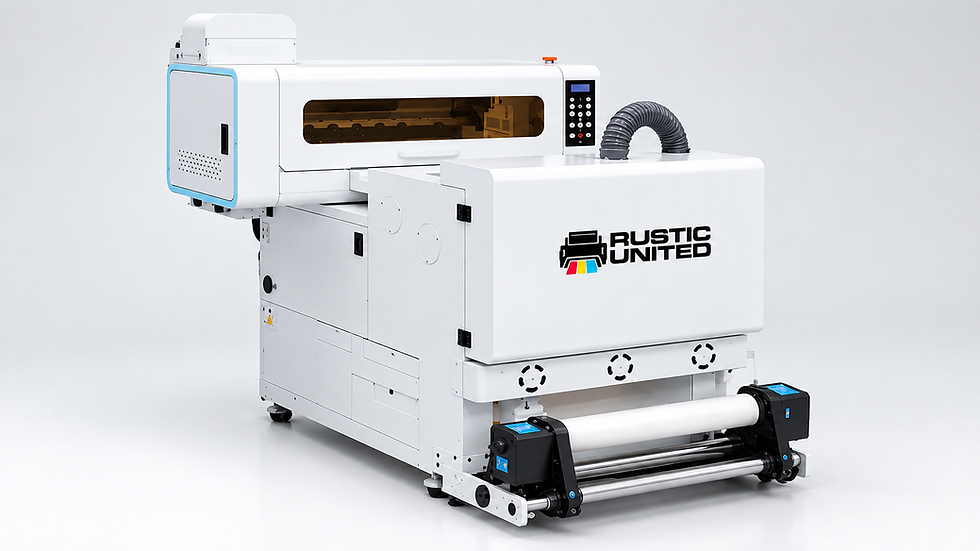
For printing, a roll-to-roll DTF printer built for continuous runs replaces a desktop unit that needs constant babysitting. Machines like the 16.5" All-in-One DTF Printer handle higher film widths and longer runs without manual intervention.
For powder application, an automatic shaker cuts your biggest time drain. A unit like the 24" STS Automatic S-20 Powder Shaker applies powder evenly in seconds instead of minutes, and it eliminates the uneven coverage that causes cracking after wash.
For curing, a conveyor dryer beats a heat gun every time at volume. It gives you consistent temperature and speed, which matters more as your order count grows.
Step 3: Standardize Your Workflow
Growth breaks inconsistent processes fast. Write down your exact settings for ink saturation, powder amount, cure temperature, and press time and pressure. Post them at every station.
A standardized workflow means:
New employees train in days, not weeks
Fewer reprints from inconsistent settings
Quality stays the same at 100 shirts as it was at 10
Shops that skip this step usually see their reject rate climb as volume increases. A documented process keeps that rate flat.
Step 4: Build a Supply Chain That Does Not Run Out
Nothing stalls a growing shop faster than running out of DTF film, ink, or powder mid-order. At 10 shirts a day, you can order supplies weekly and stay fine. At 100 shirts a day, you need a buffer stock and a primary supplier you trust.
Look for consumables built for consistency across large batches, not just single sheets. Films like Ultra Premium Double Matte Hot Peel film hold up across long runs without curling or adhesion issues, and inks such as Rustic United DTF Ink are formulated for stable output across high-volume printing.
Alpha Print Supply stocks these production-grade consumables specifically for shops scaling past hobbyist volume, so you are not sourcing from three different vendors to keep your line running.

Step 5: Add Capacity Without Adding Chaos
You do not have to do every part of production in-house to hit 100 shirts a day. Many growing shops outsource overflow orders, rush jobs, or specialty transfers rather than buying a second full setup before they need it.
For shops in Kansas City, Missouri, HotPressKC offers DTF and UV DTF transfer printing as a done-for-you option, letting you take on larger orders during peak demand without adding equipment right away. This kind of flexible capacity buys you time to scale deliberately instead of overextending on machinery.
Step 6: Price for Growth, Not Just Survival
Your pricing at 10 shirts a day will not work at 100. Bulk consumable purchasing can lower your per-unit cost, so check that your margins improve as volume grows instead of staying flat.
Recalculate your cost per shirt every time your order volume jumps by 25 percent. Include ink, film, powder, labor, and equipment depreciation. Shops that skip this step often discover too late that they are growing revenue while shrinking profit.
Step 7: Market Consistently to Fill the Pipeline
Equipment and process solve the supply side. You still need steady demand to justify 100 shirts a day. Wholesale accounts, local business partnerships, and repeat B2B clients give you predictable volume, which is far more valuable than sporadic one-off orders.
Focus on:
Wholesale pricing tiers for bulk buyers
Reorder reminders for repeat apparel clients
Local business partnerships for uniforms, events, and merch
Predictable demand lets you plan supply purchases and staffing with confidence instead of reacting week to week.
Final Thoughts: Scale With a Plan, Not Guesswork
Growing from 10 to 100 shirts a day is not about buying the biggest printer on the market. It is about fixing your real bottleneck, standardizing your process, and building a supply chain that holds up under pressure. Shops that scale successfully treat growth as a series of deliberate steps, not a single leap. If you are ready to take the next step, Alpha Print Supply can help you choose the right printer, powder shaker, film, and ink for your target volume, so your equipment matches your goals instead of holding them back.
Reach out today to talk through what your shop actually needs to scale.
Frequently Asked Questions
How much does it cost to scale a DTF business from 10 to 100 shirts a day?
Costs vary by starting point and by the printer, automatic powder shaker, and curing equipment you choose, so contact APS for current pricing and a quote matched to your target volume (equipment freight is quoted separately). Consumable costs also rise, though per-unit pricing can drop with bulk purchasing. Phased upgrades, and financing where available, let many shops scale without paying everything upfront.
What is the biggest bottleneck when scaling DTF production?
Powder application and curing usually slow shops down more than the printer itself. Manual shaking and heat gun curing cannot keep pace with higher-volume printing. Automating these two stages typically unlocks the biggest jump in daily output.
Do I need a bigger printer to hit 100 shirts a day?
Not always. Many shops hit higher output by fixing workflow and curing bottlenecks before upgrading the printer itself. A wider-format or roll-to-roll printer helps once your other stations can keep up, but printer speed is rarely the first limiting factor.
Should I outsource orders while scaling my DTF shop?
Outsourcing overflow work, like using a transfer printing partner such as HotPress KC, lets you accept larger orders without buying equipment you may not need long-term. It works well during peak seasons or while you are testing new product lines before committing to in-house capacity.
How do I keep print quality consistent as I scale? Standardize your settings for ink, powder, and cure time, and document them for every station. Consistency comes from repeatable processes, not from any single piece of equipment. Regular quality checks at set volume milestones catch drift before it becomes a pattern.


Comments