
Why DTF Consumables Matter More Than Your Printer

Your printer prints the design. Your DTF consumables decide whether that design survives the first wash. A high end printer with cheap DTF film, weak DTF ink, or inconsistent DTF powder still produces transfers that crack, peel, or fade within weeks. This blog breaks down why DTF consumables carry more weight than the machine itself, what separates reliable supplies from poor ones, and how to choose materials that protect your output and your reputation.
Whether you're launching a new print shop or expanding production, Alpha Print Supply offers a complete range of DTF equipment and premium consumables to support every stage of your business.
The Real Engine Behind DTF Printing Quality
A printer is a tool. It applies ink to film based on the settings you give it. The film, ink, and powder you feed into that process determine the final result. Two shops running the same printer model can produce completely different transfer quality. The difference almost always traces back to consumables, not hardware. Print quality depends on how well film, ink, and powder work together, not on brand logos.
Consider this: a printer failure is obvious immediately. A DTF film that curls at 70% humidity or a DTF powder that under-cures at low heat settings often shows problems only after the transfer ships to a customer. By then, the damage is done to your reputation, not just the garment.
DTF Films: The Foundation of Every Transfer
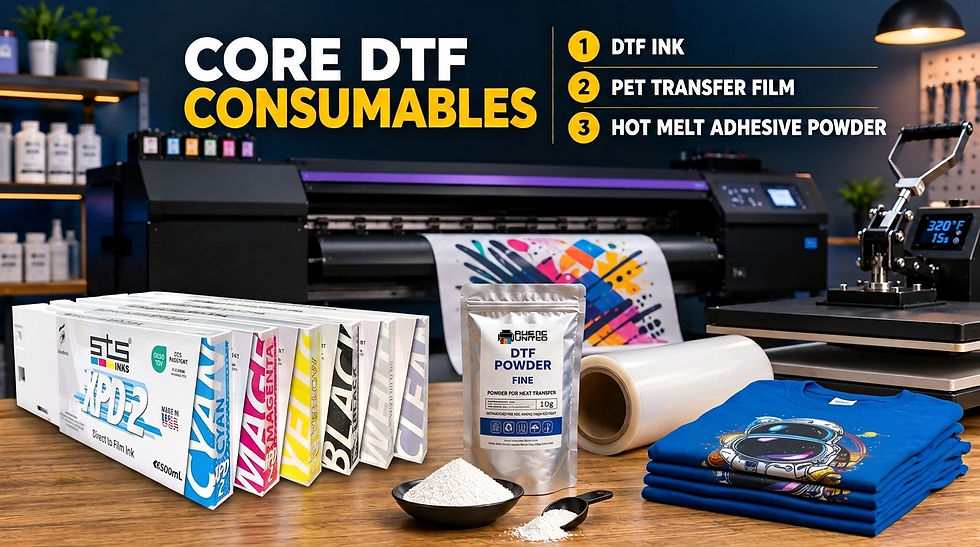
DTF transfer film is the surface every design lands on before it moves to fabric. Film quality affects release, clarity, and how sharp fine details print.
PET Film Thickness and Clarity
Most DTF PET film ranges from 75 to 100 microns. Thinner film feeds more smoothly through printers but can wrinkle under heat. Thicker film resists curling and handles detailed graphics better, especially on larger print runs.
Look for DTF film with:
Consistent thickness across the roll, since variance causes uneven ink lay
A matte or glossy coating rated for your specific ink type
Clean release at standard press temperatures, typically 300 to 325°F
Cheap film often saves a few cents per yard but costs far more in reprints. A single failed batch of shirts can outweigh months of film savings.
DTF Inks: Color, Durability, and Wash Resistance
DTF ink determines color accuracy, opacity, and how long a design survives repeated washing. White ink specifically causes the most production issues because it settles fast and clogs print heads without proper circulation.
Quality DTF ink should deliver:
Wash resistance through at least 50 industrial wash cycles without visible cracking
Consistent viscosity that won't clog printheads mid-run
True color matching against Pantone references, not just "close enough" tones
Ink inconsistency shows up as banding, dull colors, or premature cracking on the garment. These are consumable failures, not printer failures, even though customers often blame the equipment.

DTF Powders: The Adhesion Factor
DTF powder bonds the ink to the fabric during curing. Powder particle size and melt temperature directly affect how well a transfer adheres and how soft it feels after washing.
Hot melt adhesive powder generally falls into three grades:
Fine powder for detailed designs and soft-hand feel
Medium powder for general apparel production
Coarse powder for heavier coverage on dark or textured fabrics
Using the wrong grade for your fabric type causes stiff prints, poor adhesion, or powder that flakes off after a few washes. Matching powder grade to your specific application matters as much as picking the right printer settings.
The Cost of Cutting Corners on Consumables
Reprints cost more than most shops realize. A single mispressed shirt wastes the garment, the ink, the film, and the labor time to press it again. If reprint rates run even 5% higher than they should because of unreliable DTF film or DTF ink, that adds up fast across a month of production.
Run the math on a shop pressing 500 transfers a week. A 5% reprint rate means 25 wasted transfers weekly, which translates into lost blanks, wasted consumables, and hours of rework every month. Cheaper consumables that cause even a small increase in failure rate often cost more than premium supplies over a single quarter.
Shops that switch to tested, consistent DTF consumables typically see reprint rates drop within the first few production cycles. The upfront cost per yard of film or per liter of ink matters less than the total cost per finished, saleable transfer.
Why Printer Brand Alone Won't Save Bad Consumables
Printer manufacturers, including Mimaki, build machines engineered for precision. But that precision only shows up when the consumables feeding the machine meet the same standard.
A $20,000 printer paired with inconsistent film or unstable ink still produces inconsistent output. Meanwhile, a mid-range printer paired with reliable, well-matched consumables often outperforms expectations. This is why experienced print shops budget for consumables quality first, then select equipment that supports it.
At Alpha Print Supply, this pairing philosophy shapes every recommendation. As the authorized Mimaki dealer in Missouri, Alpha Print Supply supplies DTF and UV DTF inks, films, and powders tested to perform consistently with the printers shops actually run, not just in lab conditions.
How to Choose Reliable DTF Consumables
Before restocking film, ink, or powder, run through these checks:
Confirm compatibility with your specific printer model and ink type
Ask for wash test data, not just marketing claims
Order small test batches before committing to bulk purchases
Check storage requirements, since humidity and heat degrade film and powder fast
Review supplier support for troubleshooting, not just sales
Shops that treat consumables as a strategic decision, not a routine reorder, see fewer reprints and stronger customer retention. Alpha Print Supply works directly with shops to match film, ink, and powder combinations to their actual production needs rather than pushing a single generic bundle.
Final Thoughts: Consumables Build Your Reputation, Not Just Your Prints
Your printer gets you started. Your DTF consumables decide whether customers come back. Every crack, peel, or faded print traces back to a material choice, and every crisp, durable transfer does too. If you're ready to stop guessing which film, ink, or powder actually performs, Alpha Print Supply can help you match consumables to your equipment and production goals. Reach out to the team today and build a supply setup that protects your output, not just your budget.
Frequently Asked Questions
1. Do DTF consumables really matter more than the printer itself? Yes. The printer applies the design, but film, ink, and powder determine durability, color accuracy, and adhesion. Two shops with identical printers can get very different results based on consumable quality alone.
2. What causes DTF prints to crack after washing? Cracking usually comes from low-quality ink, incorrect powder grade, or under-curing during the pressing stage. Wash resistance depends heavily on how well the ink and powder bond to the fabric fibers.
3. How thick should DTF film be for best results? Most shops use film between 75 and 100 microns. Thinner film suits detailed designs and smooth feeding, while thicker film resists curling on larger production runs.
4. Can I mix consumables from different brands? You can, but compatibility testing matters first. Ink, film, and powder formulated to work together typically produce more consistent results than mixed combinations with unknown chemistry.
5. How often should I test new consumable batches? Test every new batch before full production runs, especially after switching suppliers. A small test print catches adhesion or color issues before they reach a customer order.

Comments