
Why Does DTF White Ink Clog? Causes, Fixes & Prevention Guide

DTF white ink clogs because its titanium dioxide pigments naturally settle over time. Without proper circulation, routine maintenance, and high-quality consumables, these pigments can accumulate inside the printhead, restrict ink flow, and reduce print quality. If left unresolved, clogged nozzles can lead to production delays, wasted ink, and expensive printhead repairs. At Alpha Print Supply, we regularly help print shops and apparel decorators troubleshoot DTF printing issues and choose reliable consumables that deliver consistent results.
In this guide, you'll learn the most common causes of DTF white ink clogs, the early warning signs, practical troubleshooting steps, and proven ways to keep your printer performing at its best.
Common Causes Of White Ink Clogging
Understanding the root cause of a clog helps you fix the problem faster and reduce the chances of it happening again.
1. White Ink Settling and Pigment Separation
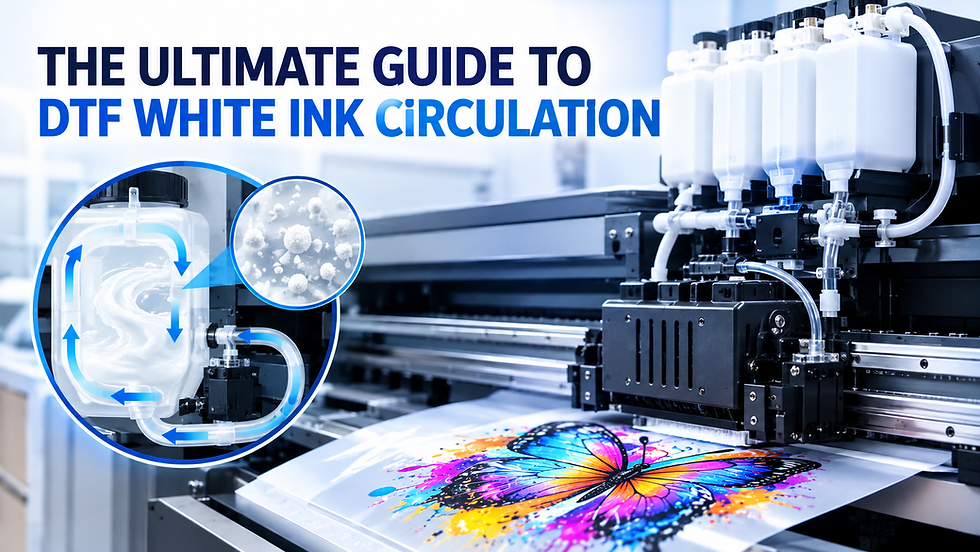
DTF white ink contains titanium dioxide, a heavy pigment that naturally settles when left idle. Without proper circulation, these particles accumulate inside ink lines and the printhead, eventually restricting ink flow.
2. Infrequent Printer Use
Leaving a DTF printer unused for several days allows white ink to settle and dry around the printhead. Printing a daily nozzle check or test pattern helps keep the ink moving and minimizes clogging.
3. Poor Maintenance Routine
Skipping routine maintenance allows dried ink to build up on the printhead and maintenance components. Regular nozzle checks and cleaning the capping station and wiper blade help prevent blockages before they affect print quality.
4. Low-Quality DTF White Ink
Poor-quality DTF ink often has inconsistent pigment dispersion, increasing the risk of sediment buildup and nozzle clogs. Using professional-grade DTF consumables supports smoother ink flow and more reliable printing.
5. Incorrect Storage and Environmental Conditions
Extreme temperatures, low humidity, and improperly stored ink can affect ink consistency and accelerate drying. Keeping ink sealed and maintaining a stable printing environment helps reduce clogging issues.
Signs Your White Ink Is Starting to Clog
Watch for these early warning signs before a minor blockage turns into an expensive repair:
Missing or inconsistent white coverage in printed designs.
Patchy or faded white underbase beneath colored graphics.
Broken or incomplete patterns during a nozzle check.
Horizontal banding or uneven white printing.
Frequent cleaning cycles with little or no improvement.
Reduced print consistency despite using the same print settings.
Identifying these symptoms early allows you to resolve the issue before production quality and printer performance decline.
How to Fix a Clogged DTF White Ink System
Run a Nozzle Check
Start with a nozzle check to identify whether the clog is minor or affecting multiple nozzles. This helps determine the appropriate maintenance step without wasting ink.
Perform the Recommended Cleaning Cycle
Run the printer's standard cleaning cycle and check the nozzle pattern again before repeating it. Avoid excessive cleaning, as it consumes DTF ink and may not resolve the underlying issue.
Restore Proper White Ink Circulation
Ensure the printer's white ink circulation system is operating correctly, or gently agitate the white ink if your printer manufacturer recommends it. Proper circulation keeps pigments suspended and improves ink flow.
Inspect Maintenance Components
Check the capping station, wiper blade, dampers, and surrounding components for dried ink or wear. Dirty or worn maintenance parts reduce cleaning efficiency and can contribute to recurring clogs.
Seek Professional Service When Needed
If repeated nozzle checks and cleaning cycles fail to restore print quality, professional servicing may be necessary. Addressing severe clogs early can help prevent permanent printhead damage and reduce repair costs.
Recommended Prevention Measures
The table below summarizes the most effective preventive measures.
Prevention Measure | Why It Matters | Best Practice |
Print Regularly | Keeps white ink circulating and prevents pigment from settling inside the printhead. | Print a nozzle check or small test pattern daily if the printer is idle. |
Use High-Quality DTF White Ink | Premium ink offers better pigment dispersion and smoother ink flow. | Purchase professional-grade DTF ink from trusted suppliers. |
Follow a Maintenance Schedule | Prevents dried ink buildup and detects issues early. | Perform daily nozzle checks and clean the capping station and wiper blade regularly. |
Maintain Proper Temperature & Humidity | Stable conditions reduce ink drying and improve print consistency. | Keep the print room temperature at 20–28°C (68–82°F) with 45–65% relative humidity, |
Store Ink Correctly | Proper storage preserves ink quality and prevents contamination. | Keep bottles sealed, away from direct sunlight, and use ink before its expiration date. |
Check the White Ink Circulation System | Proper circulation prevents heavy pigments from settling. | Ensure automatic circulation is functioning or agitate ink when recommended. |
Replace Worn Maintenance Parts | Old maintenance components reduce cleaning effectiveness. | Inspect and replace dampers, wiper blades, and capping stations as needed. |
Final Thoughts: Keep Your Prints Flowing, Not Your Costs
A clogged printhead rarely happens because of a single mistake. More often, it's the result of small maintenance issues that build up over time. By understanding the causes of DTF white ink clogs, recognizing the warning signs early, and following a proactive maintenance routine, you can keep your printer operating efficiently and avoid unnecessary repairs.
Just as important is choosing dependable DTF consumables. High-quality DTF white ink, premium DTF film, and reliable DTF powder all contribute to smoother production, better print consistency, and fewer maintenance headaches.
At Alpha Print Supply, we understand the challenges print businesses face and we provide professional DTF printing solutions, including high-performance DTF printers, premium white inks, transfer films, and technical support designed to help businesses maximize productivity while minimising maintenance costs.
Explore our complete DTF product range and discover reliable printing solutions for your business.
Frequently Asked Questions
1. Why does DTF white ink clog more often than colored inks?
DTF white ink contains titanium dioxide, a much heavier pigment than those used in CMYK inks. These particles naturally settle over time, making white ink more prone to clogging if it isn't circulated regularly. Routine maintenance and consistent printer use help keep the pigment suspended and flowing properly.
2. How often should I print to prevent white ink clogs?
If your printer isn't being used for production, it's a good practice to print a nozzle check or a small test pattern every day. This keeps the white ink moving through the printhead and reduces pigment buildup. Regular operation is one of the simplest ways to prevent clogging.
3. Can low-quality DTF ink damage my printer?
Yes. Inferior DTF ink may contain inconsistent pigment particles or poor formulations that increase sediment buildup and restrict ink flow. Over time, this can lead to frequent clogs, reduced print quality, and potentially expensive printhead repairs. Using premium-quality consumables helps protect your equipment.
4. Should I run multiple cleaning cycles if my printhead is clogged?
Not immediately. Start with a nozzle check and perform the recommended cleaning cycle, then evaluate the results before repeating the process. Excessive cleaning wastes DTF ink and may not resolve the underlying issue if maintenance components or ink quality are contributing to the clog.
5. What's the best long-term way to prevent DTF printhead clogs?
The most effective approach combines regular printing, proper maintenance, high-quality DTF consumables, correct ink storage, and a stable printing environment. Following a preventive routine is more cost-effective than repairing or replacing damaged printheads. It also helps maintain consistent print quality and production efficiency.


Comments